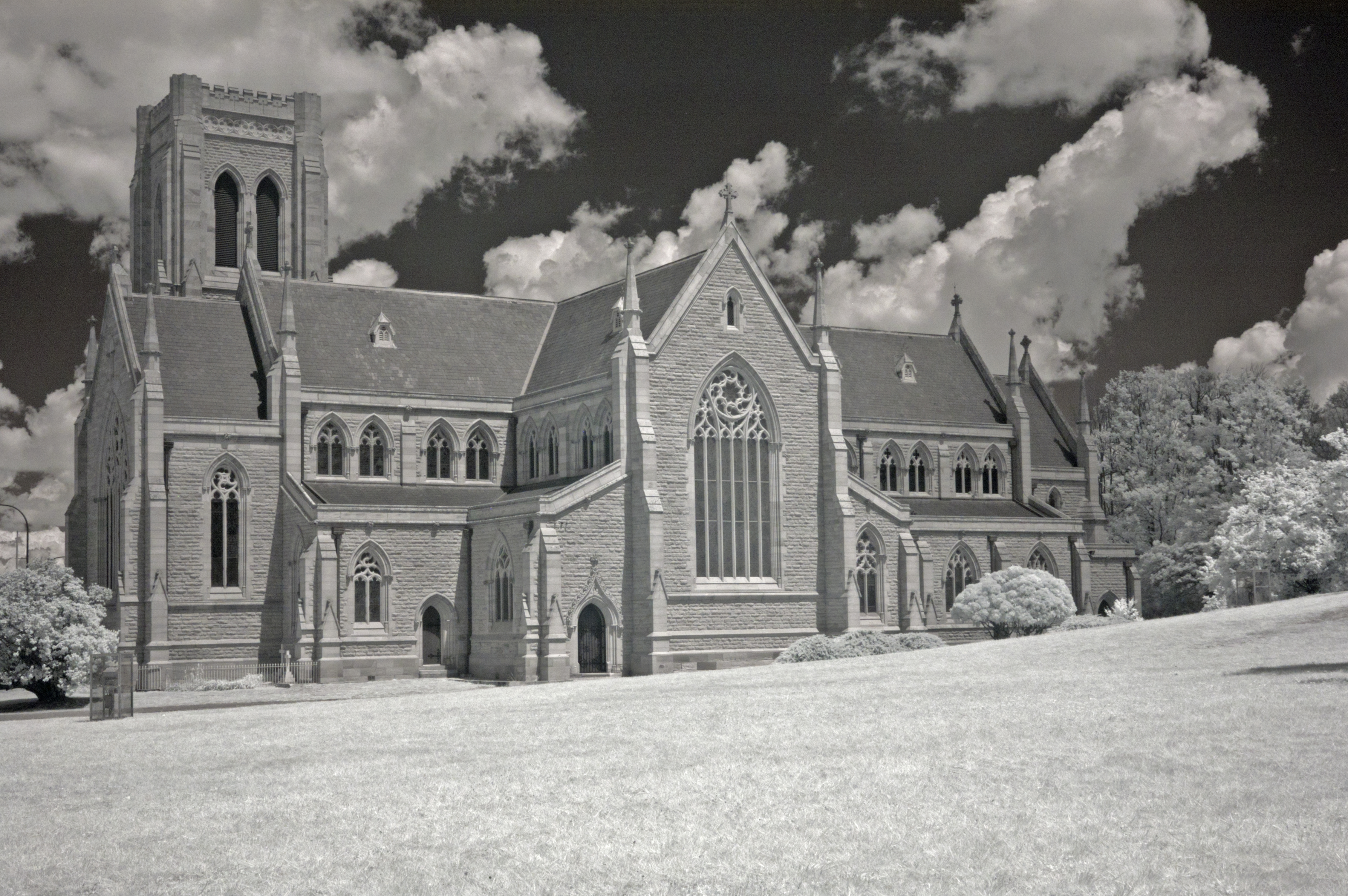
Here in Goulburn, we are proud to have an Anglican Cathedral, St Saviours, set on a large area of land in the heart of the city. The Cathedral’s foundation stone was laid on the 15th January, 1874 with the construction expected to last at least 10 years. Efforts are still being made to raise the necessary funds to complete the spire, a part of the original plans but never erected.
The cathedral’s architecture is unique, with only one other example of its style, located at Bendigo in Victoria, Australia.
The following image is in infra red, ideally suited for architectural photography. The camera used was converted to only make infra red images by Life Pixel of Mukilteo , WA, 98275, USA. My only relationship with Life Pixel is that of a highly satisfied customer.
St SAVIOURS CATHEDRAL, GOULBURN, NSW, AUSTRALIA PHOTOGRAPHED IN INFRA RED.
On Saturday, reading the notes for Weekend Two I thought,’Dawn to Dusk’, what a great idea, Monday’s relatively clear, I’ll knock it over then. I checked the weather forecast and sunrise on Monday 16th was for 7.30am. That didn’t sound right to me as on Saturday 16th March is was bright daylight at 7.30am. As I’m a bloke and always right, I knew the forecaster meant 6.30am. Mistake No 1.
So, came Monday morning 16th March and I was out of bed at 5am, black as pitch. It’s early autumn I thought, won’t be cold outside. Mistake No2. Wearing shorts, T shirt and track suit top for the stroll down to my chosen viewpoint to wait for dawn was mistake No 3. When I got back home, frozen stiff about 8am I learned it was only 5 degrees C when I left home at 5.30am. Not cold by many standards but here where it reached into the 40s C just a few weeks ago is seemed below zero where I stood for quite a while making these images.
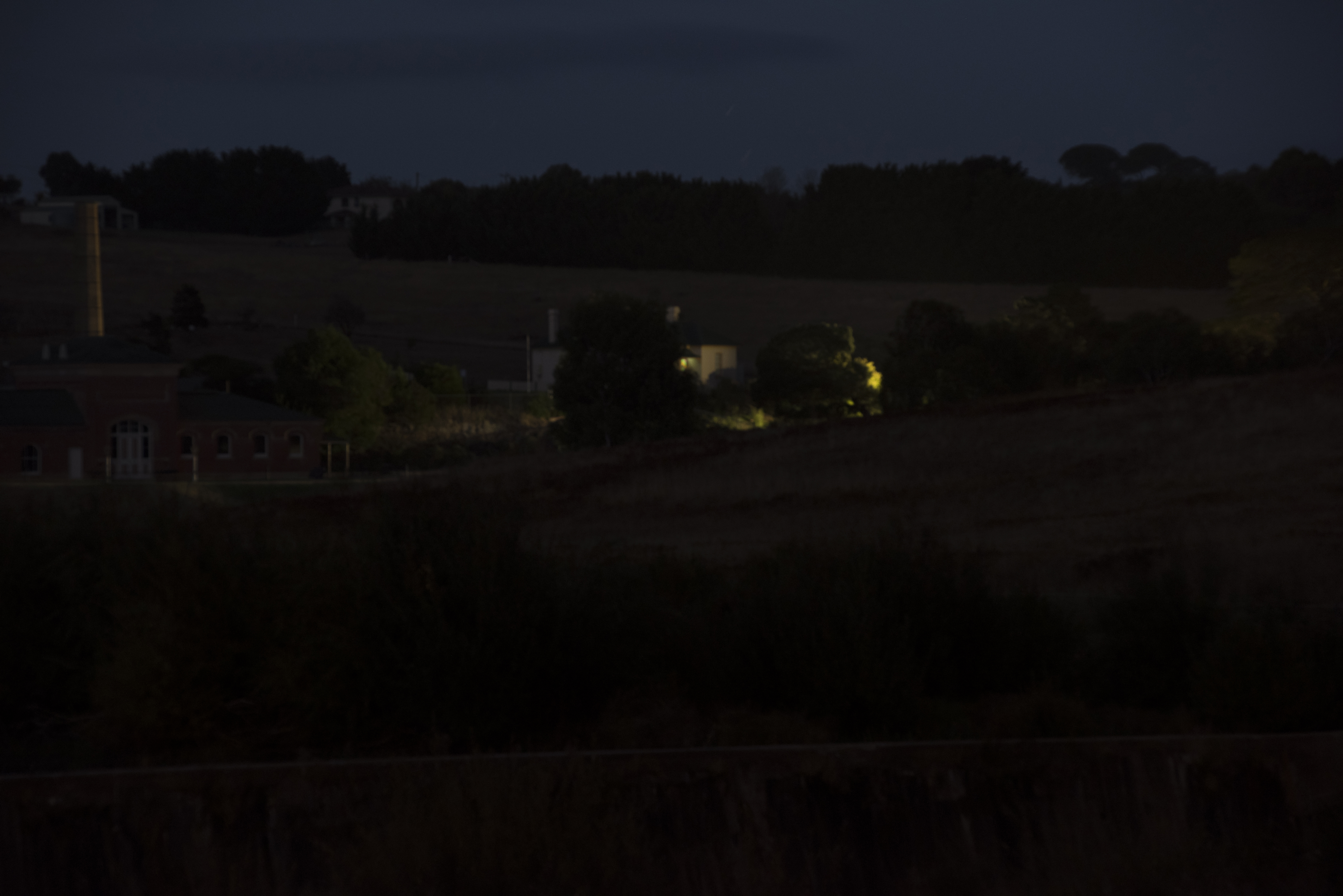
From my selected viewpoint on a bridge crossing the Wollondilly River just after 5.45am I could just make out the lights of an outbuilding near the historic Goulburn Waterworks and not much else. I set my camera up on the tripod, checked the light meter, readied the camera for my first exposure and set the ISDO at 640. Here is No 1, lens set at 200mm, exposure 30 seconds @ f2.8, ISO 640.
.
GOULBURN HISTORIC WATERWORKS AND OUT BUILDINGS, 5.59am ON MONDAY 16th MARCH, 2015
My next exposure was made just 12 minutes later at 6.11am, again with the lens set at 200mm, exposure 25 seconds@f8, ISDO 640.
GETTING LIGHTER, 6.11am ON MONDAY 16th MARCH, 2015
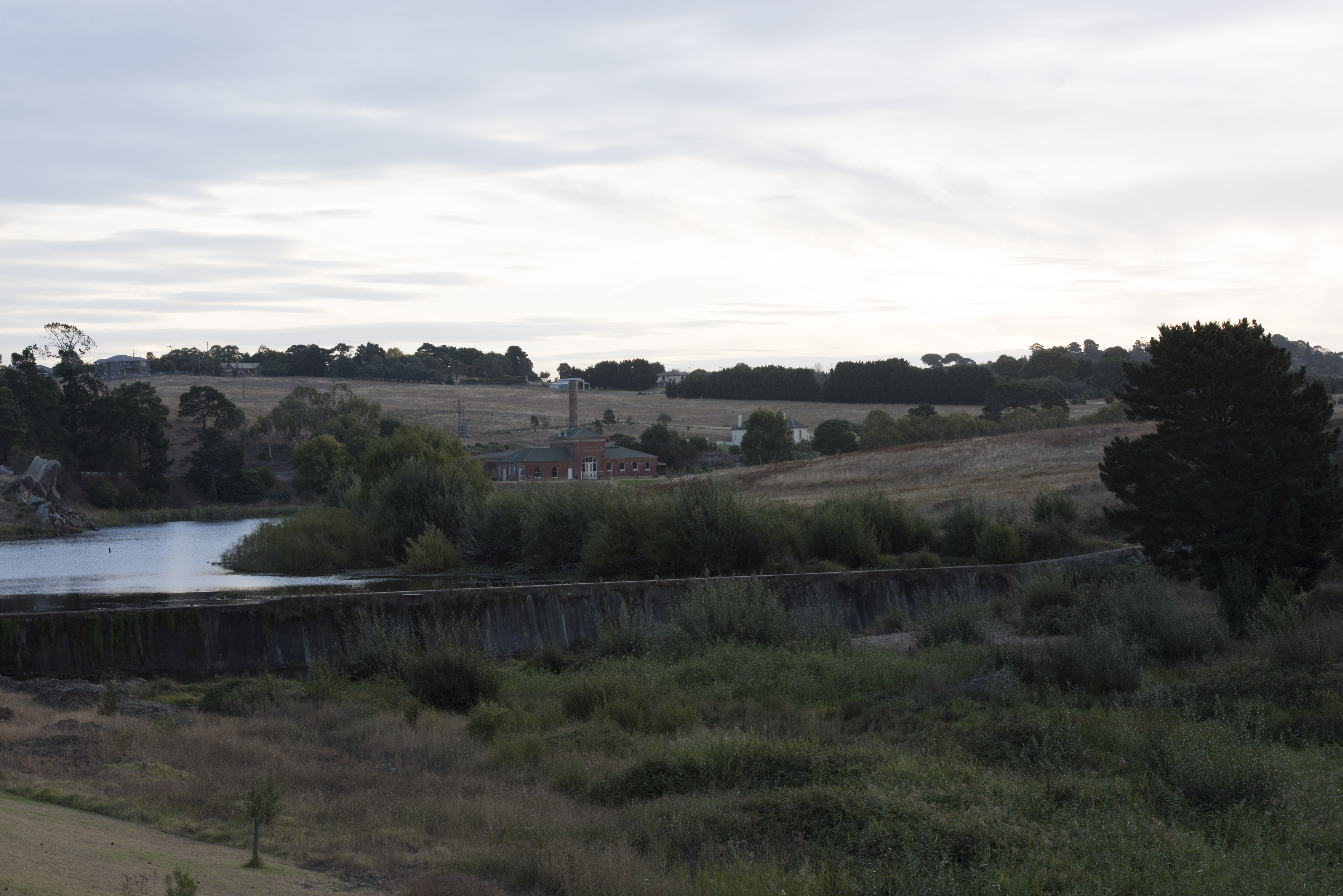
Nine minutes later at 6.20am, the lens still set at 200mm, exposure was still 25 seconds@f8. ISO remained at 640.
LIGHTER STILL,6.20am ON MONDAY 16th MARCH 2015
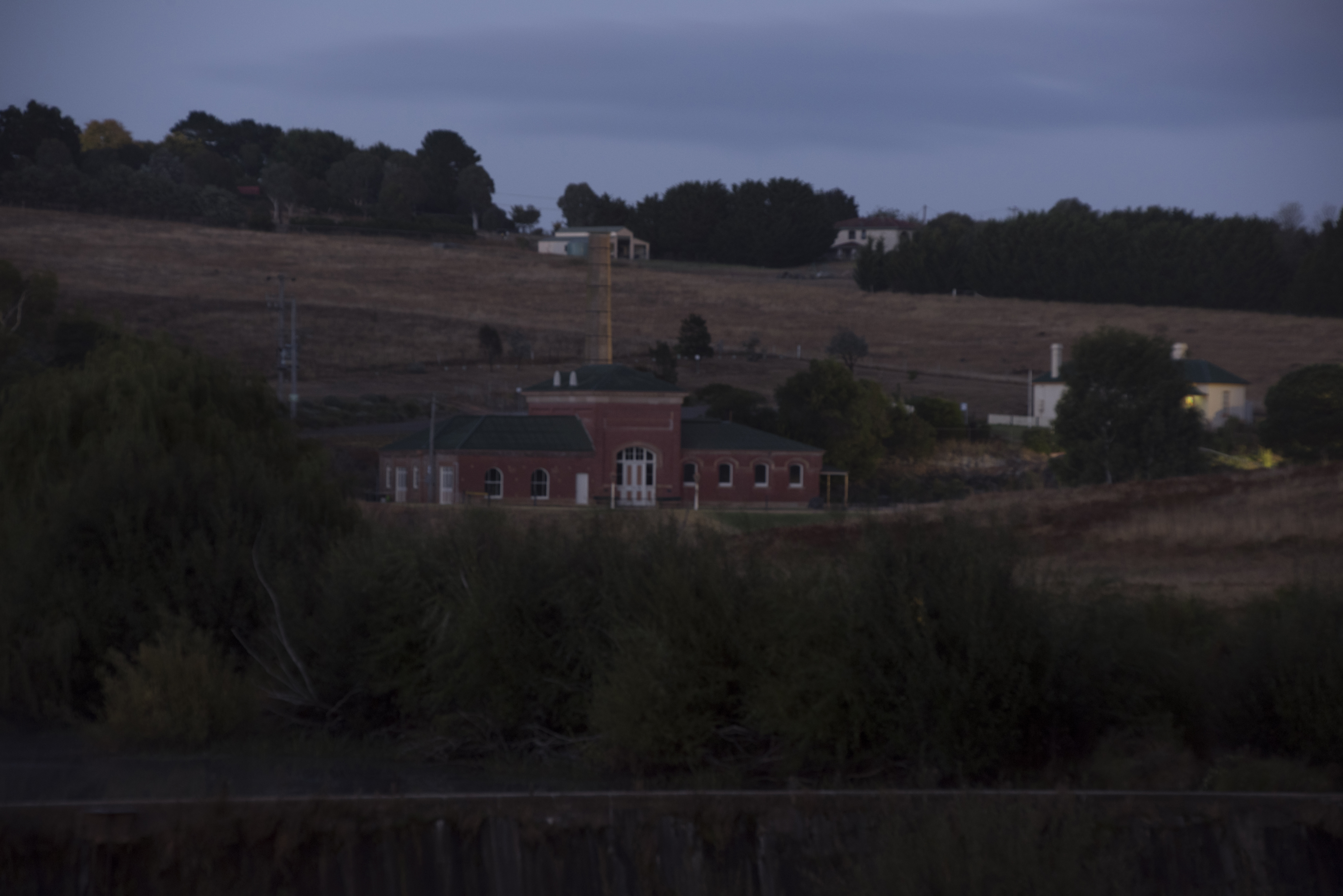
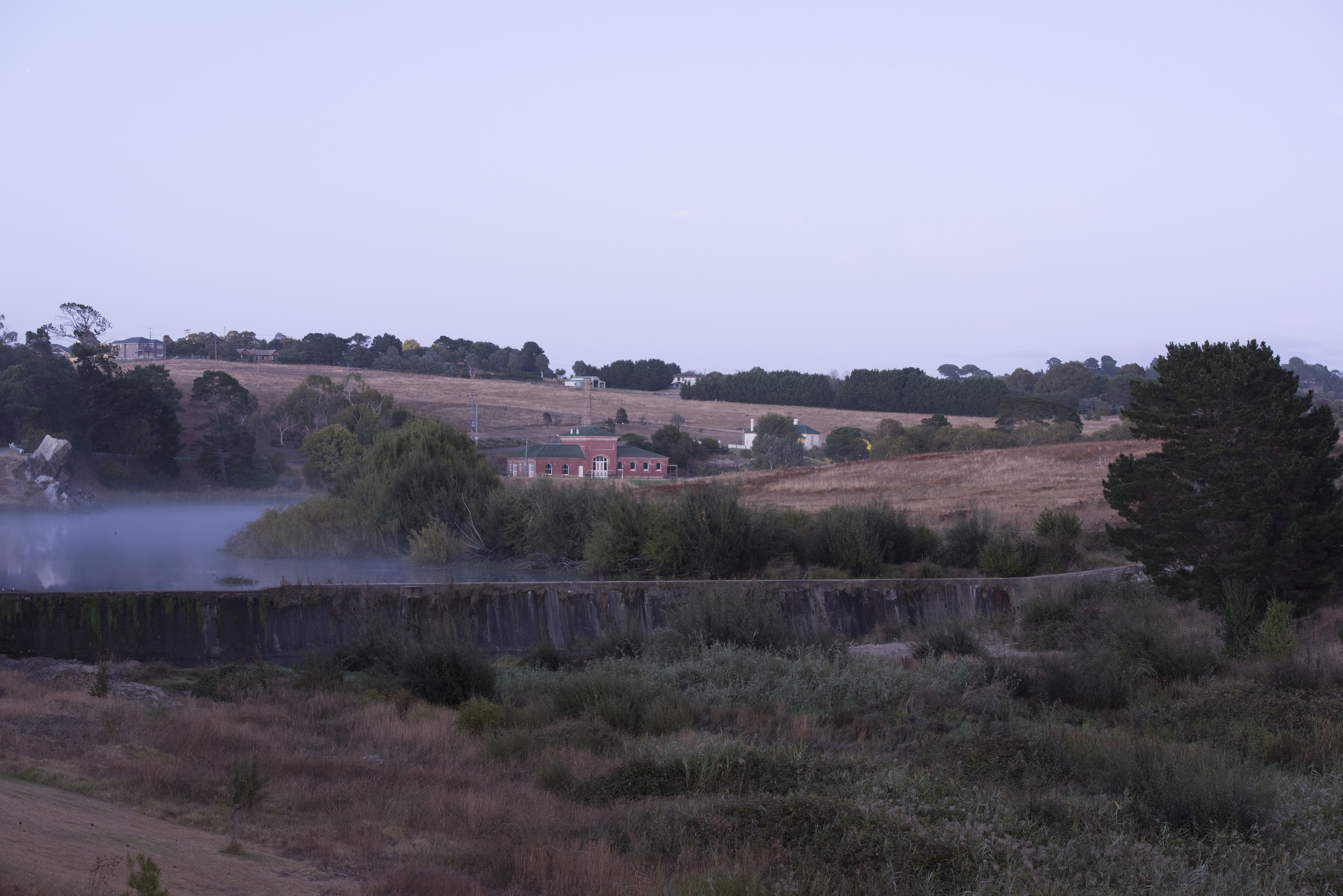
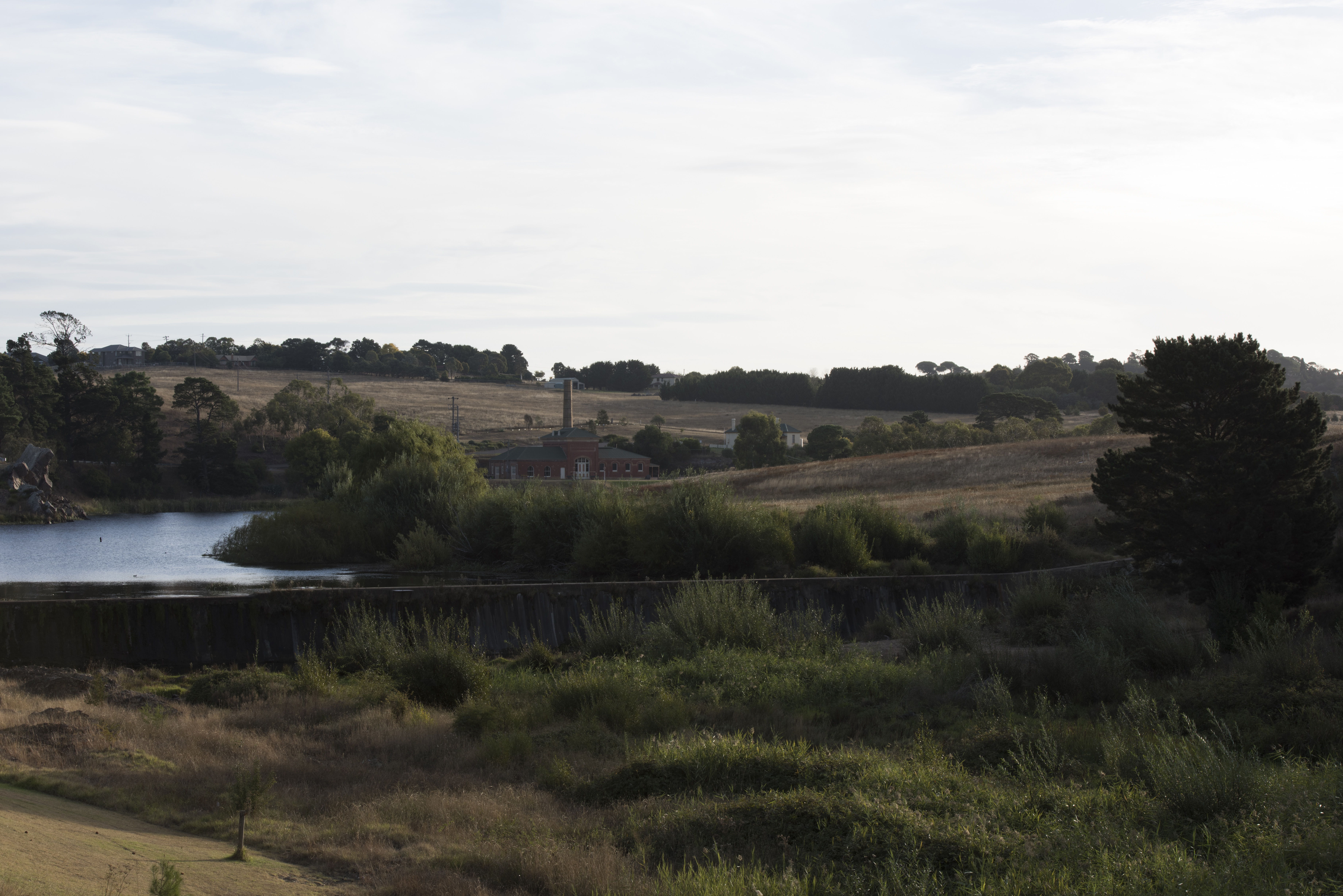
At 6.30am, for image No 4, I decided to vary the field of view and set the lens to 70mm in order to catch the mist rising from the water trapped behind the weir. Exposure this time was 15 seconds@f8, and I left the ISO at 640. This image was made exactly 1 hour before sunrise.
1 HOUR BEFORE SUNRISE WITH A WIDER FIELD OF VIEW AT 6.30am, MONDAY 16th MARCH 2015.
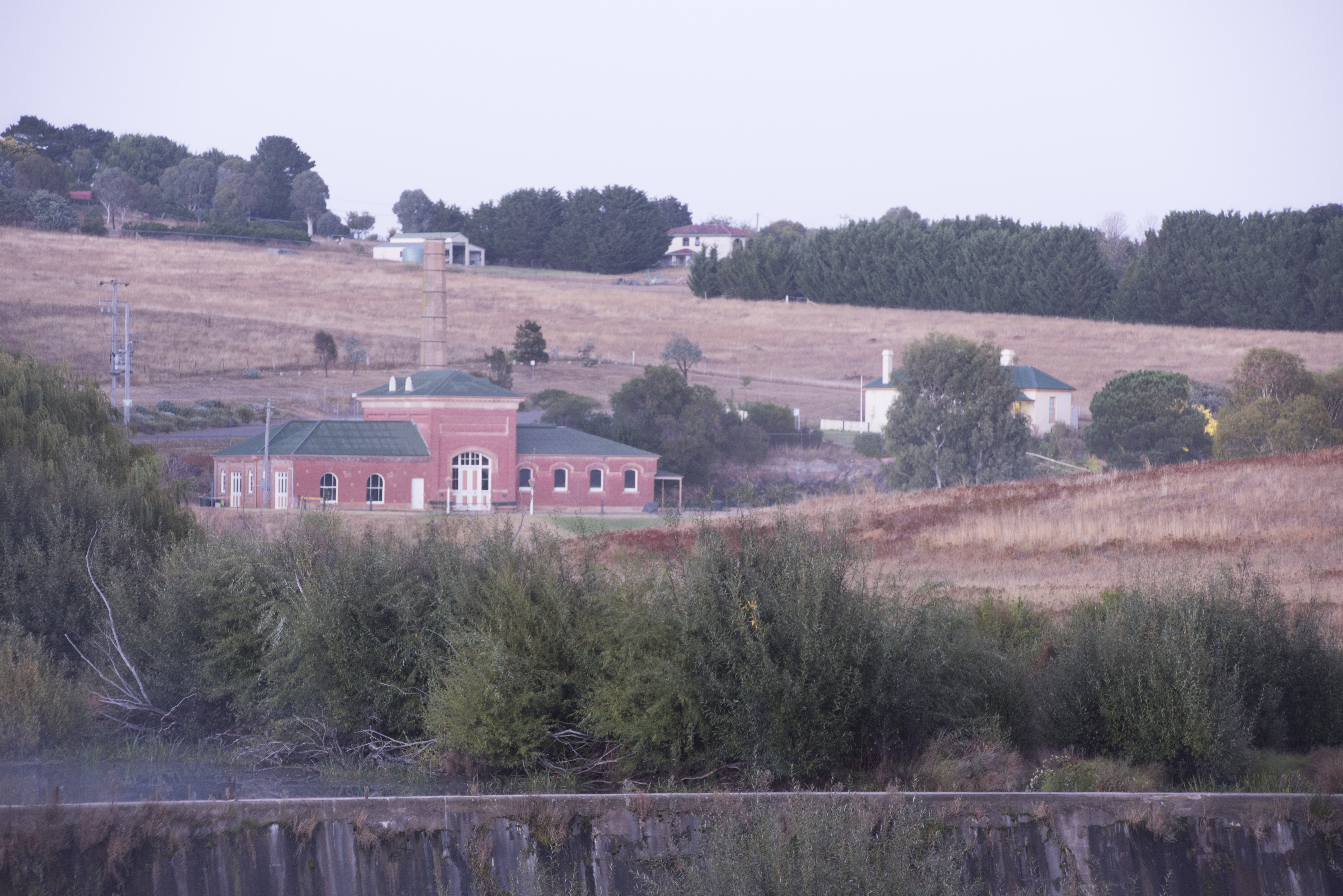
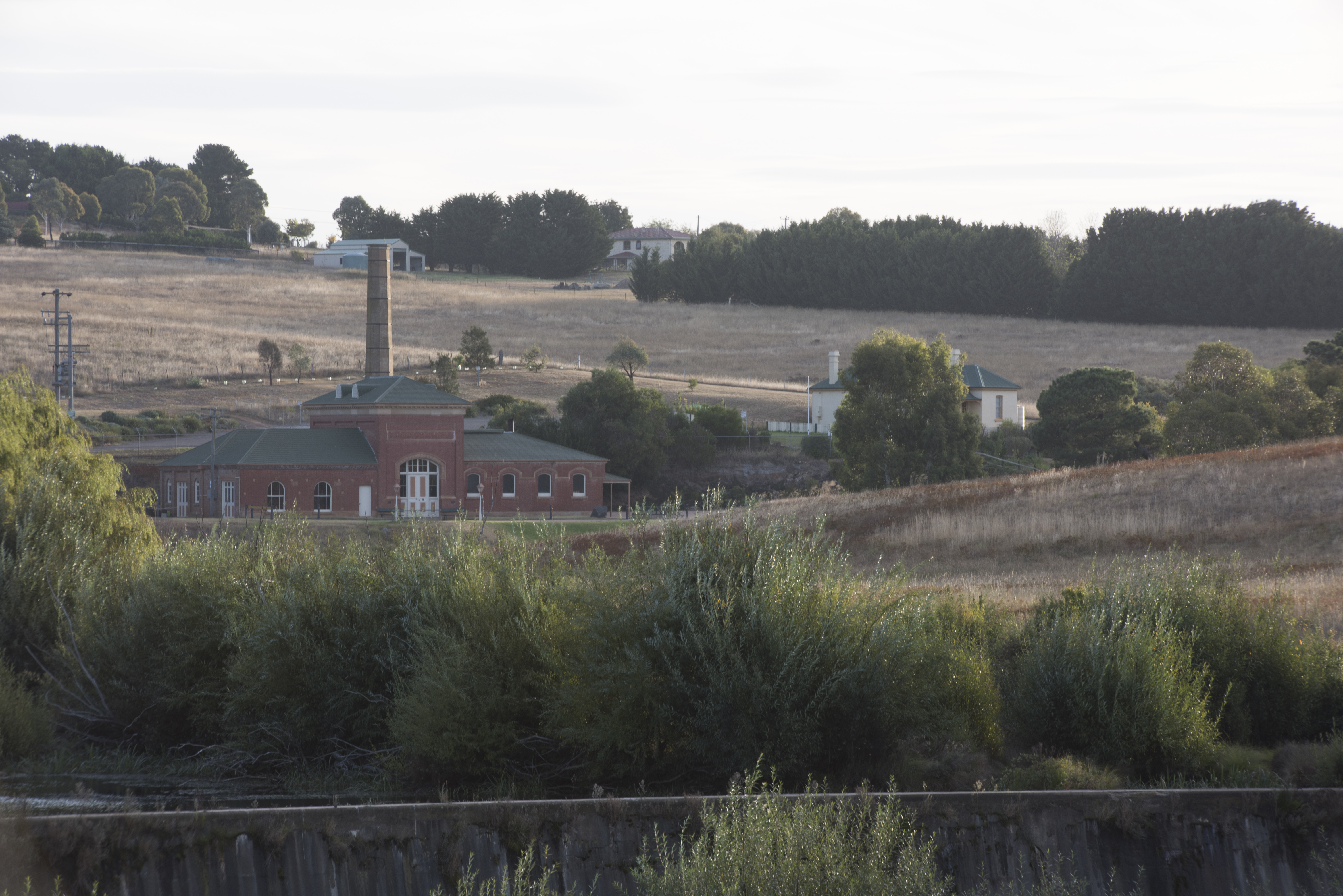
Immediately after making the above image, I zoomed the lens back to 200mm and made this next exposure , 25 seconds@f8, ISO remaining at 640. It’s interesting to note that the exposure time increased by 10 seconds on the lens change between 70 and 200mm.
1 HOUR BEFORE SUNRISE, BACK TO 200mm.
Finally, the cold got to me and I decided to to head home.
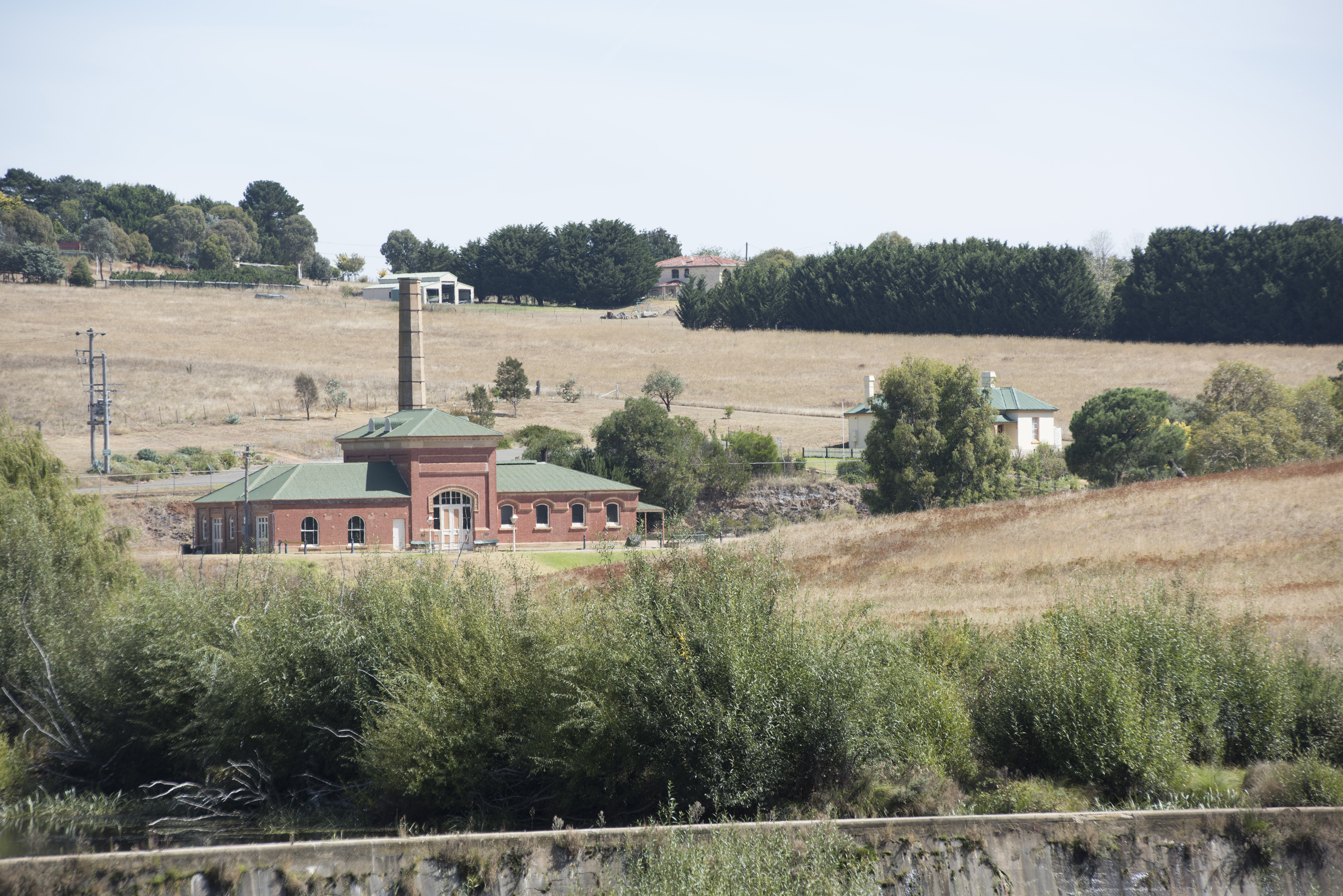
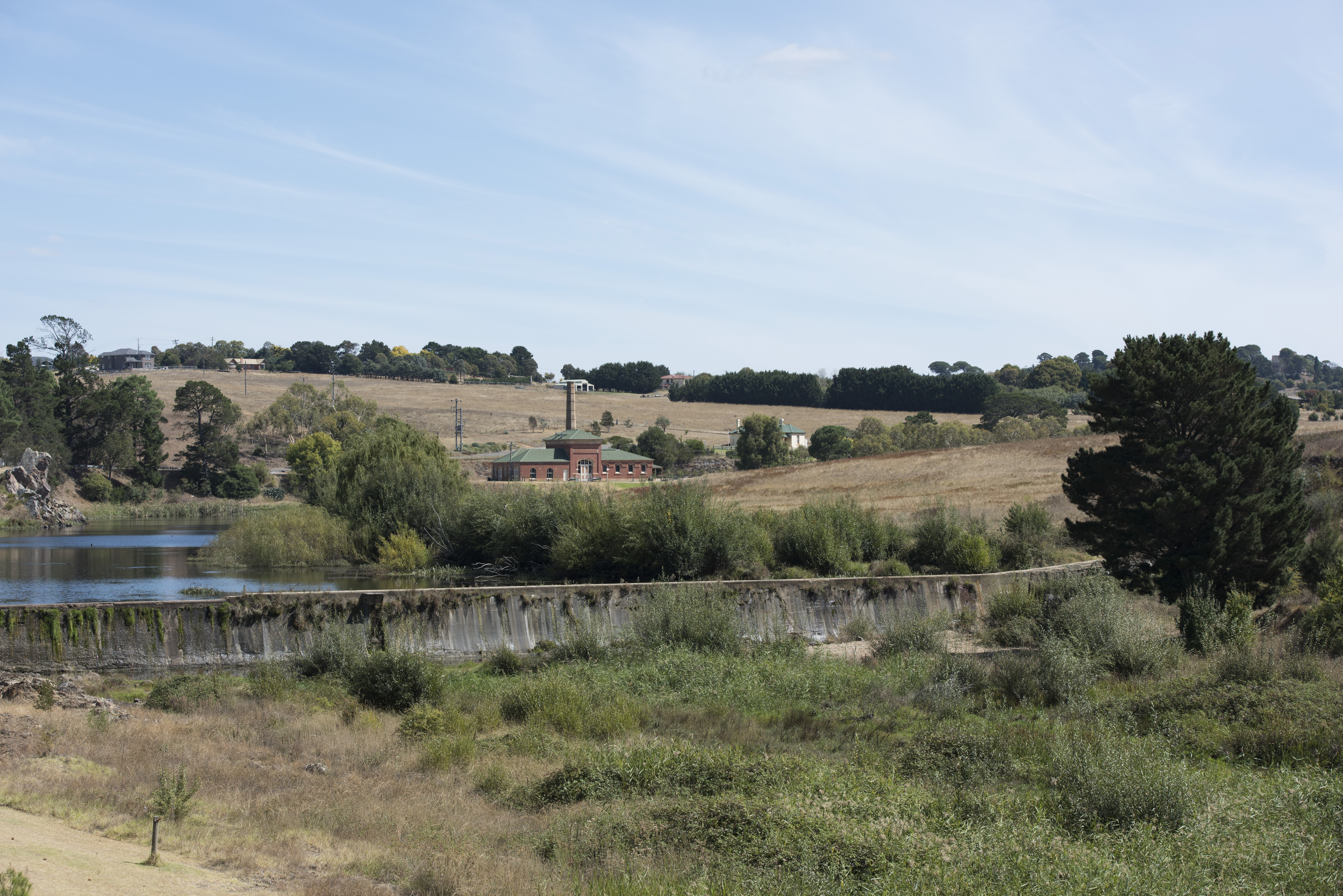
My next two images were made about 2.30pm from the same viewpoint. I changed the ISO back to 100 and left the aperture at f8. For the first image I set the lens at 200mm and exposure at 1/160th second@f8, then for the second, I pulled the lens back to 70mmwith the exposure set at 1/250th second , again at f8.
2.30pm on MONDAY 16th MARCH 2015, 200mm2.30pm MONDAY 16th MARCH 2015, 70mm
Later, about 6.30pm from the same viewpoint, I made the following image, closing the aperture down to f16 to take advantage of its greater depth of field in the hope of recording the lengthening shadows on the hills in the background. With the lens set at 70mm, exposure at f16 was 1/30second at ISO 100.
LENGTHENING SHADOWS, 6.30pm ON MONDAY 16th MARCH 2015, 70mm
About 15 minutes later, about 6.45pm with the lens zoomed back to 200mm, I made the following image, exposure 1/13th second, again at f16 and ISO still at 100.
LENGTHENING SHADOWS 6.45pm MONDAY 16th MARCH 2015 200 mm
Then, about 7.05pm I made my final image at 70mm, aperture 1/5th second, still at f16 with ISO at 100.
FINAL IMAGE, 7.05pm ON MONDAY 16th March 2015, 70mm
All of the proceeding images have not been post processed and are exactly as recorded in camera. The only exception has been in the reduction of image size to 10MB or less.
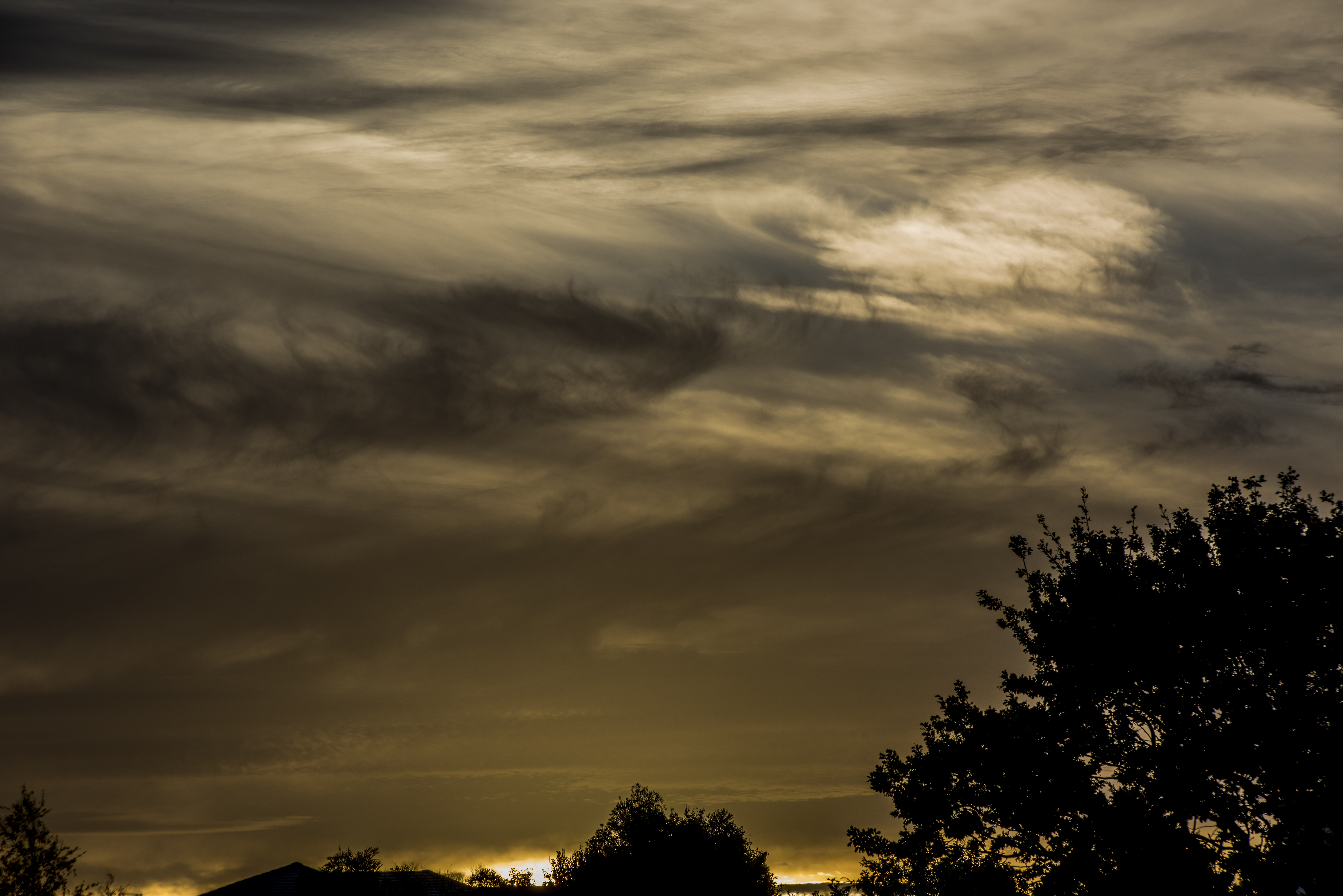
However, on walking home just before sunset, about 7.25pm I couldn’t resist the cloud in the darkening sky so here is its image, enhanced slightly in post processing. Hope you like it.
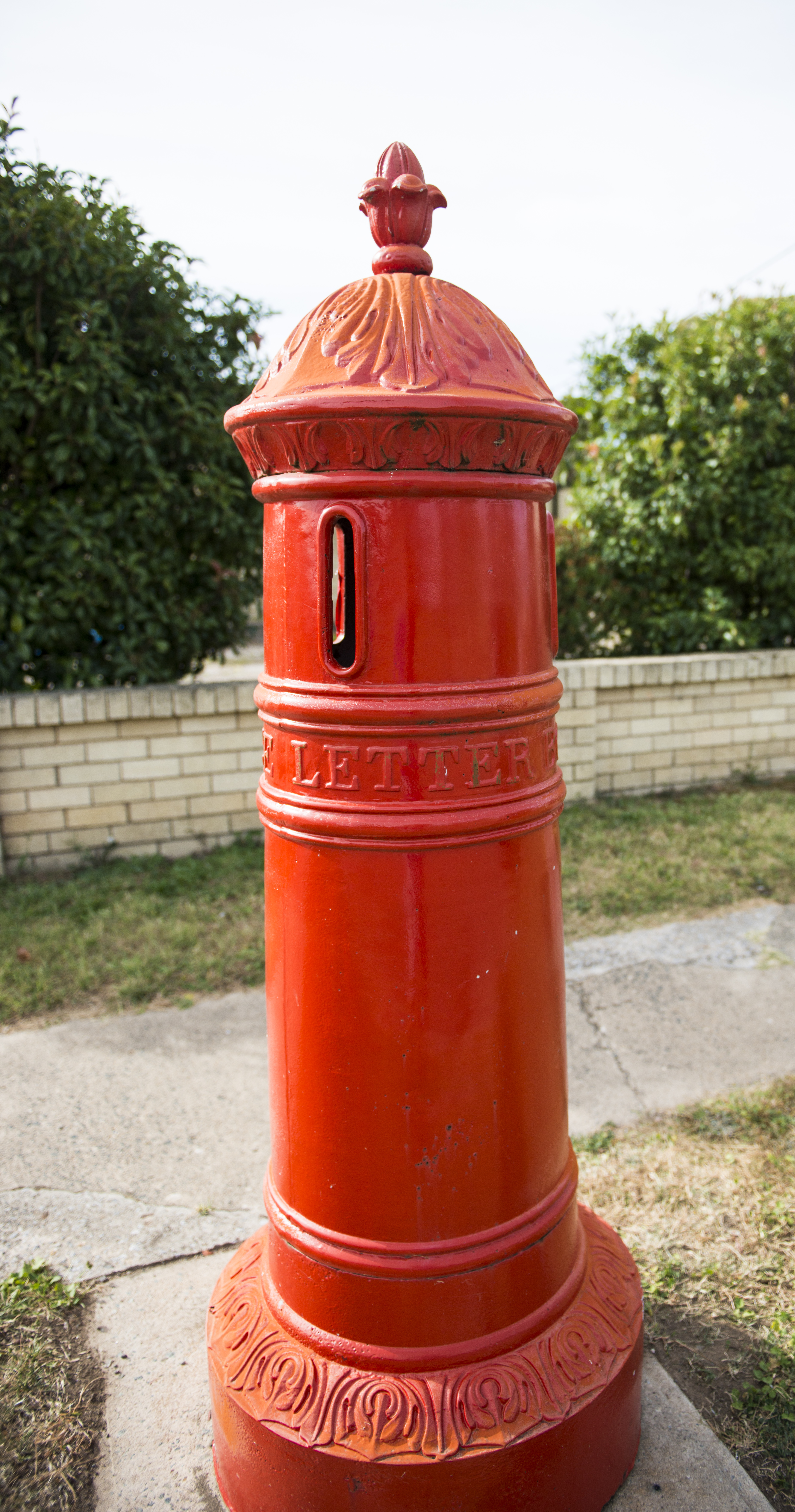
Red is a very strong and powerful colour and tends to be the dominant colour wherever it is used.
It’s also the colour used to indicate danger.
HISTORIC RED POSTAL PILLAR BOX
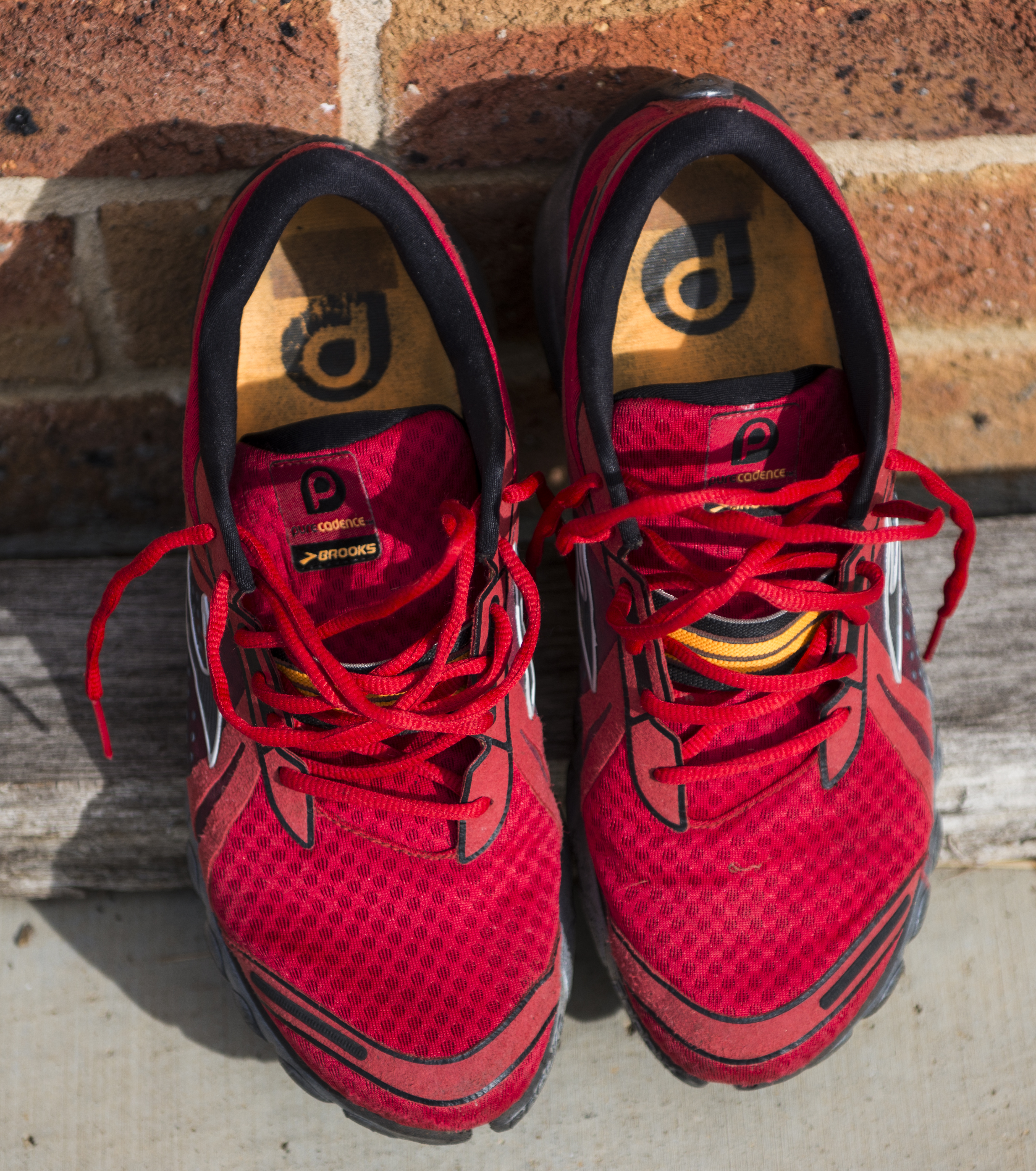
These two red objects speak for themselves.
TWO FOR THE PRICE OF ONE
Taking an airing after a hard mornings workout.
PLEASE LET ME REST A WHILE.
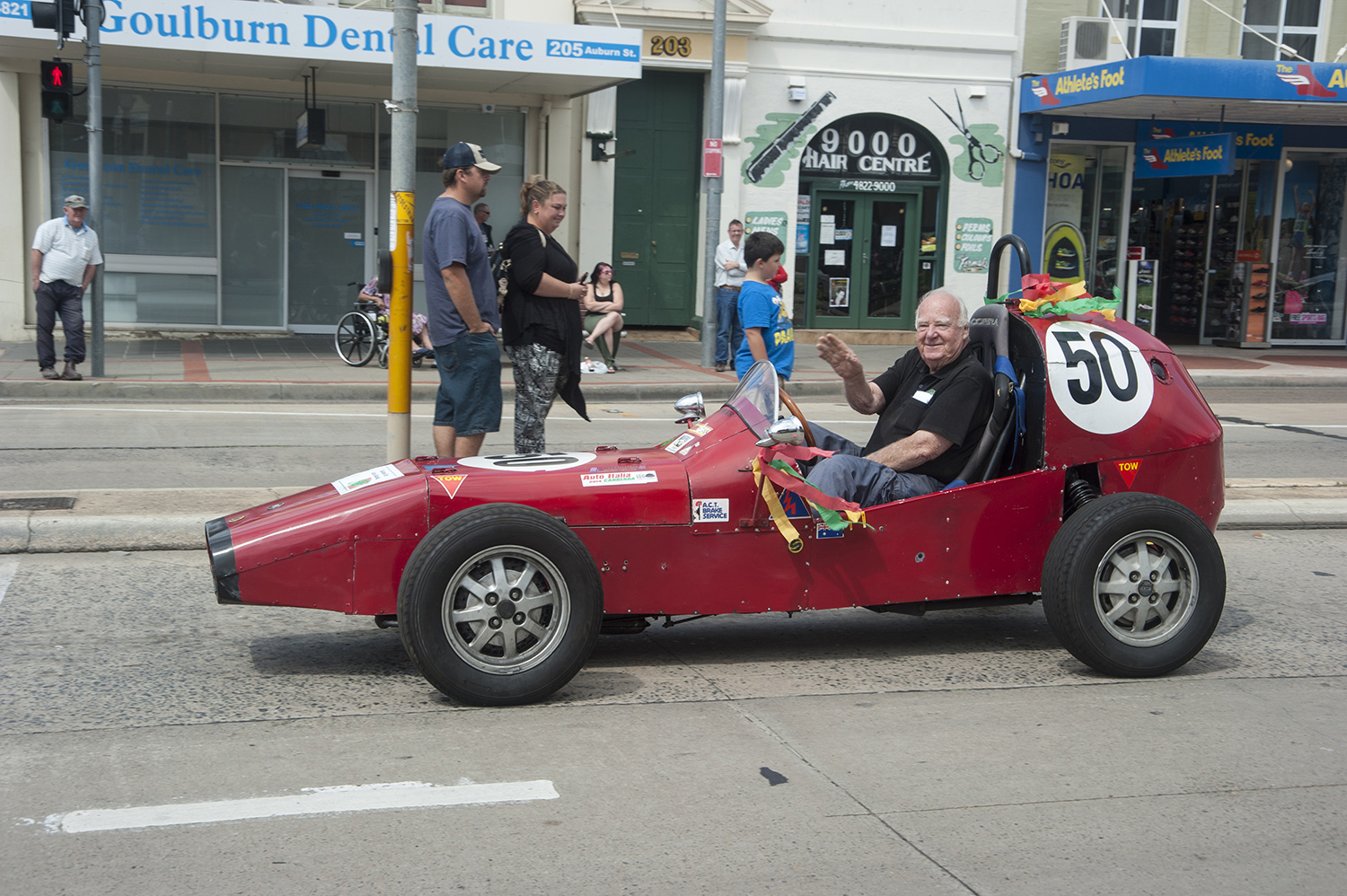
Despite the busy and non neutral background, I just couldn’t resist this image from a parade here in town on Sunday afternoon. The smile on the driver’s face tells it all.
Michelle’s Montreal Jazz Festival example reminded me of a visit in 2013 I made to the Canowindra Balloon Festival Night Burn. Canowindra is a small town in western New South Wales. You could sense the excitement in the crowd as the tethered balloons fired up and illuminated their surroundings and the crowd. The effect was colourful and electrifying. I made this image at the time.
LIGHTING UP AND GOING NOWHERE – YET.
Belmore Park is situate in the centre of my town and is only a short walk from the railway station. I thought it would be a great place for more night photography to fit Day 10’s requirements.
A little after 8.30pm I entered the park in front of the rotunda
THE ROTUNDA
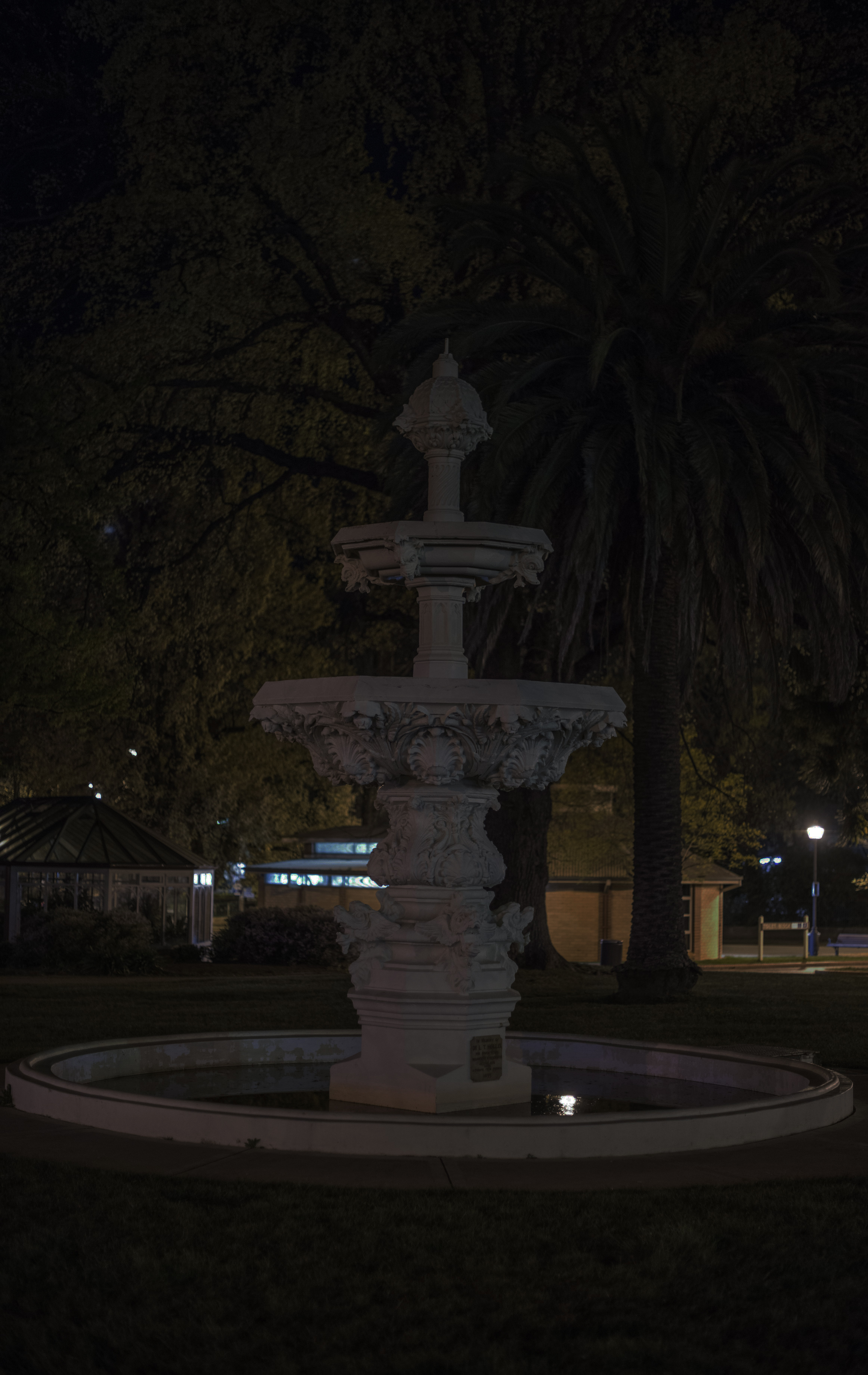
Then I passed by a dimly lit fountain, I saw that unfortunately, the water was turned off
A FOUNTAIN – WATER TURNED OFF UNFORTUNATELY.
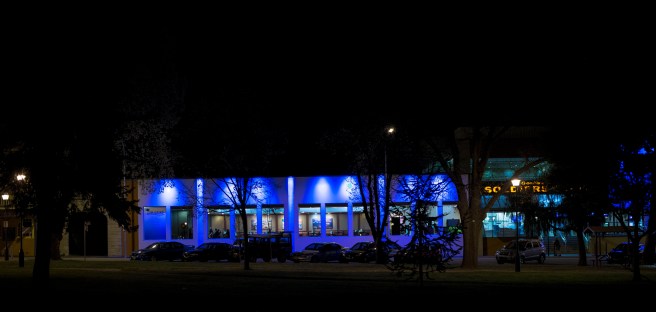
Then to my left adjacent to the park, I saw that the facade of the Services Club was illuminated in brilliant blue.
GOULBURN SERVICES CLUB
When I looked back towards my point of entry to the park, I thought that the park appeared quire eerie with its heavy tree cover and long shadows.
LOOKING ACROSS BELMORE PARK TOWARDS AUBURN STREET
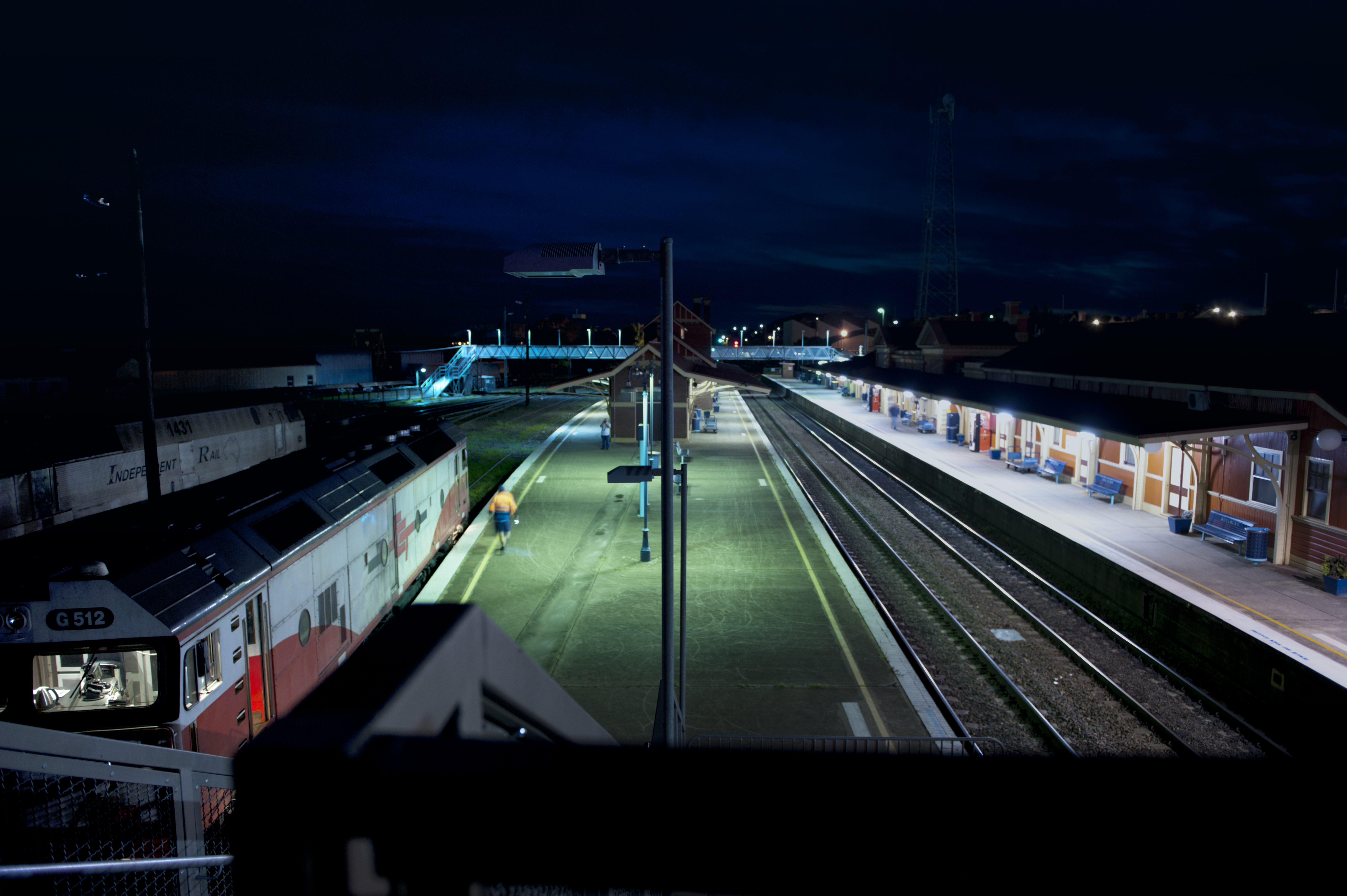
Then, I crossed over to the railway station which was ablaze with lights as a train had just arrived but alas no passengers alighted to be photographed.
GOULBURN RAILWAY STATION LOOKING SOUTH.
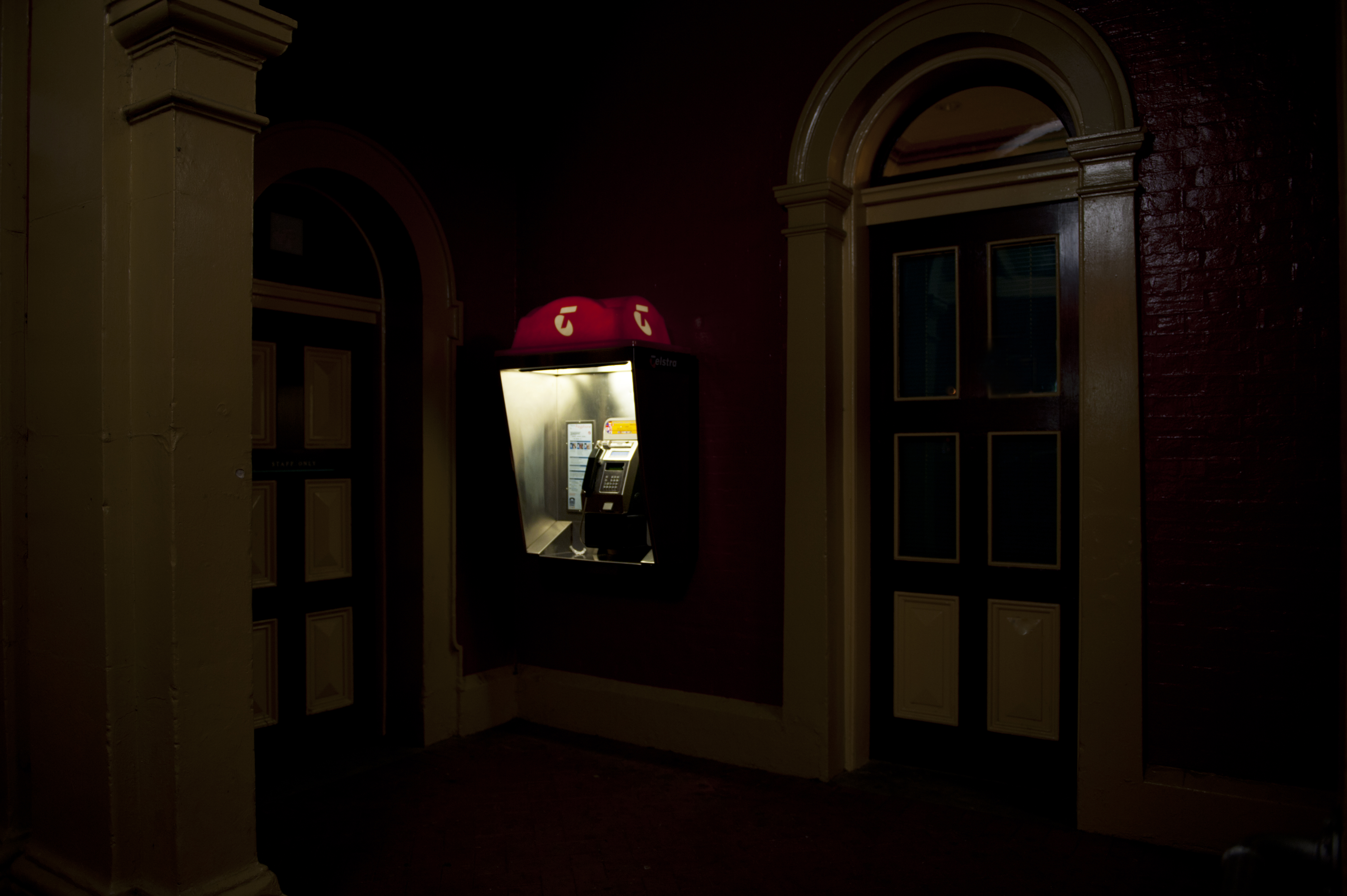
On leaving the station I passed a public telephone, it’s booth was bright but its surrounding dimness didn’t encourage dallying. Not at night anyway.
THE PUBLIC TELEPHONE AT THE RAILWAY STATION.
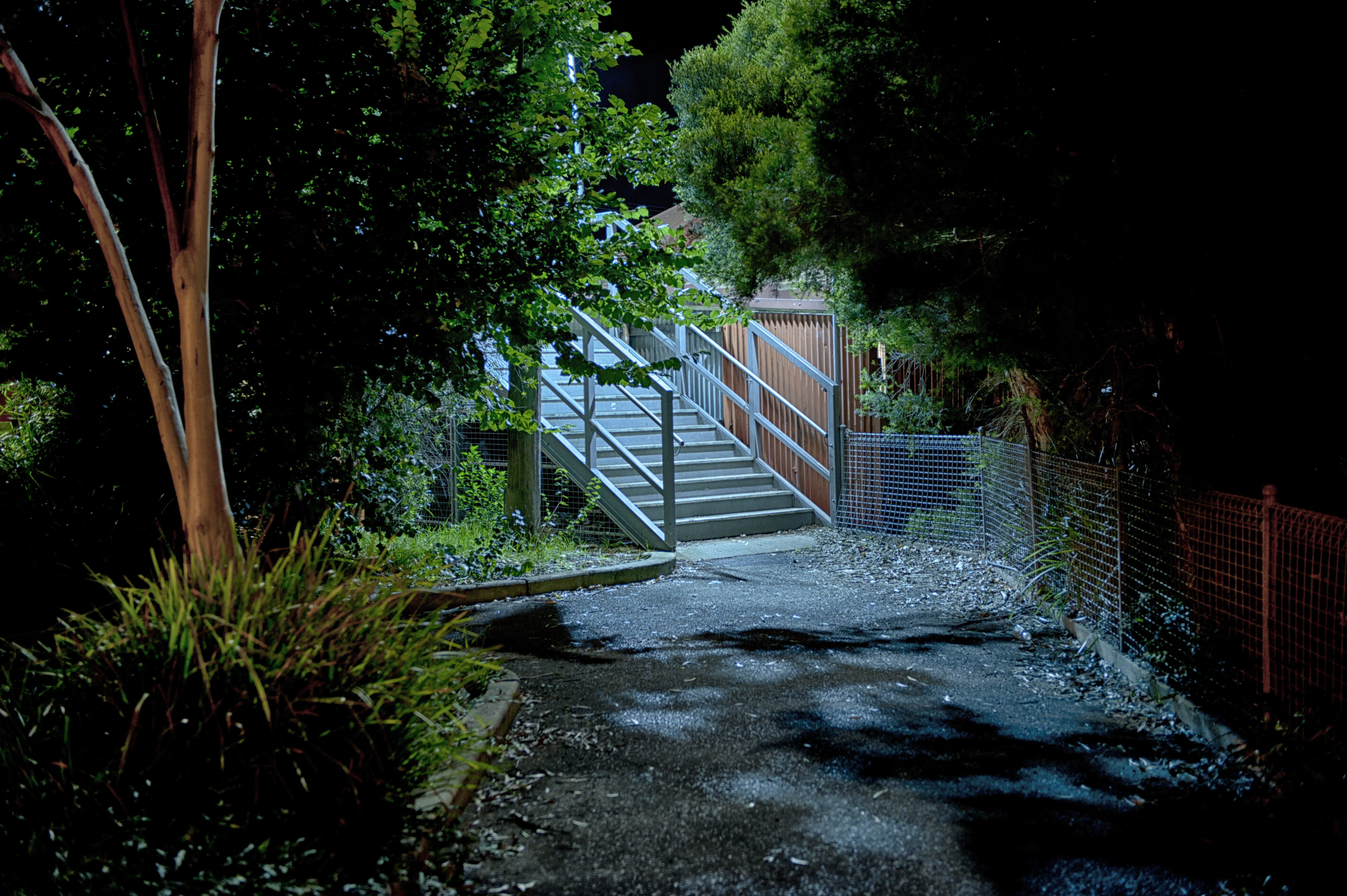
Looking back as I walked away from the station, I saw another flight of stairs looking as if it was leading nowhere – what a mystery.
RAILWAY STATION STAIRS- WHERE TO?
It’s a balmy night so the stroll was pleasant, the lighting interesting and the lack of people mystifying.
Two blogs in one day, what a superb effort. This morning when I worked on the Day 8th images, the sun was shining brightly and the light was more than adequate for the task.
This afternoon it is a different story, plenty of cloud cover sometimes obscuring the afternoon sun and the shadows are almost non existent in my backyard. So what to do?
Recently I made some portrait style images of one of my motorcycling mates and when I reviewed them I thought that some may fit the day 9 images. Probably in the quality of light department but probably not when it comes to warmth, and I don’t mean degrees Kelvin. When you see them I’m sure you see what I mean.
FULL FRONTAL LIGHT
A close look at the face shows the light has highlighted the skin pores, particularly on the nose and a few blemishes on the forehead. If the light had been softer, these blemishes may not have been so prominent. Note that the only shadow on the face is under the left eye.
The expression was of his own choosing, portraying the perceived bikie persona I guess.
In the following image the light is almost directly on the face and there is a slight shadow to the left of the face, but not pronounced enough to change the content of the image.
His defiant pose was his own idea, talk about a bikies warmth.
FULL FRONTAL LIGHT
In the following image the light is shining on the right side of the face, and creates a pleasant shadow to the left of the nose, almost dividing the face. Again the strong light has brought out the skin imperfections and pores and has created quite a large hot spot in the hair.
On this occasion, my cobber thought it was ‘cool’ so we left it there.
LIGHT TO THE RIGHT
In the next image we mucked about a bit with the light and his position. Finally I kept the light on the right side of the face and he turned his face slightly into the light. This gave some highlights to the stubble on the face and to the logo on the sun glasses whilst retaining most of the shadow.
LIGHT TO THE RIGHT
After looking at these images this afternoon I decided to include two attractive faces to lighten the load as they say.
In the first image my friend is looking directly into the camera and the flash has reduced the softness in the skin tones and hardened the image. However the highlights in the eyes make up for it somewhat as does the glow on her cheek bones.
FLASH DIRECTLY IN FRONT
In the next image my friend has adopted a relaxed pose with her head turned slightly to the left to darken that side of her hair and give her a slightly whimsical look. I used a very wide aperture, f2.8 and ensured the light was soft and utilised a black bed sheet as a backdrop.
LIGHT FULL IN FRONT
Well, I’m glad this afternoon has been overcast. I’ve had fun with Day 9’s images.
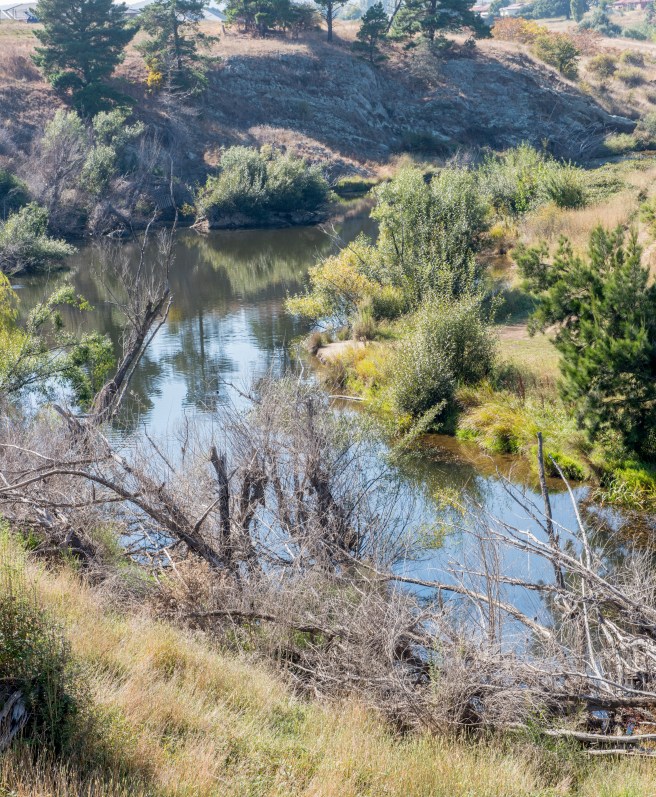
Didn’t have time yesterday to undertake Day 8’s task, so this morning I popped down to the Wollondilly River to make an image I though suited the requirements.
The Wollondilly River in portrait mode.
In the above image, the meandering river curves around to the right, leading the eye past the river banks.
In the following image, taken in landscape mode, the scene takes on a different feeling with the river still leading the eye but revealing a more expansive view of the river banks.
The Wollondilly River, landscape mode.
As a product of the western world’s education system, I read from left to right and it follows that my natural sight sense allows me to follow leading lines at their best if the the lines begin in the left hand side of the image. Works well too if the leading line is in the centre of the frame.
In the following image, my side fence works as a leading line and draws the viewer between the hedge and the eucalypts to the roof line of the house in the background.
It works well compared to the River images as, dare I saw it, it’s start complies with the dreaded rule of thirds, left hand lower corner.
A BACKYARD FENCE FLANKED BY HEDGE AND EUCALYPTS TREES.
So, another morning of photographic fun over till day nine’s email arrives.
Just like Texas, there are heaps of ‘big’ things here in the Land Down Under.
Take Uluru or, Ayres Rock as it used to be known. Uluru is in the Northern Territory, 335km or 208 miles south west of Alice Springs. It’s pretty big and I thought it would be ideal for todays subject.
Firstly though a little bit of history.
On July the 19th, 1873 William Goss, a surveyor became the first white man to see the ‘The Rock’ as we Aussies generally call it. Goss named it Ayres Rock after the then Chief Secretary of South Australia.
To local Pitjantjatjara people it was Uluru, a place of great spiritual significance and eventually the name was changed from Ayres Rock to Uluru.
Uluru is a sandstone monolith, 384 metres (1142 feet) high with a total circumference of 9.4 kms (5.8 miles). Most of its bulk is underground.
Uluru appears to change colour at different times of the year and often glows red at dawn or dusk, the most popular viewing times for tourists.
So, it is a great subject for today.
Just one problem though, Uluru is 2,818 km or 1,751 and a bit miles each way from my place. Just a tad too far to do today.
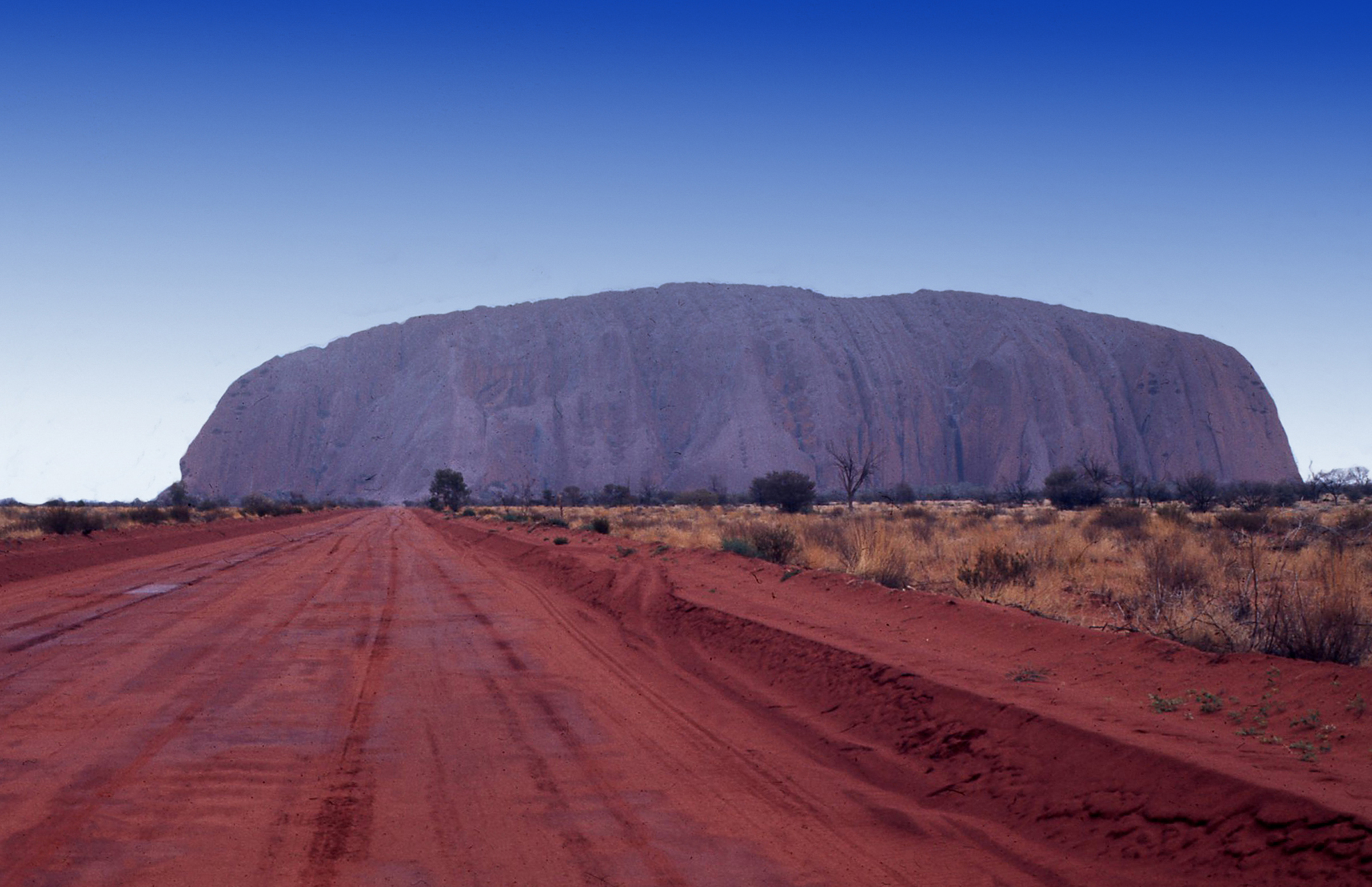
Fortunately I’ve been there on a number of occasions, most recently just last year and here is how Uluru appeared at 10.42am on May the 15th, 2014:
ULURU AT 10.42AM ON THE 15TH MAY 2014
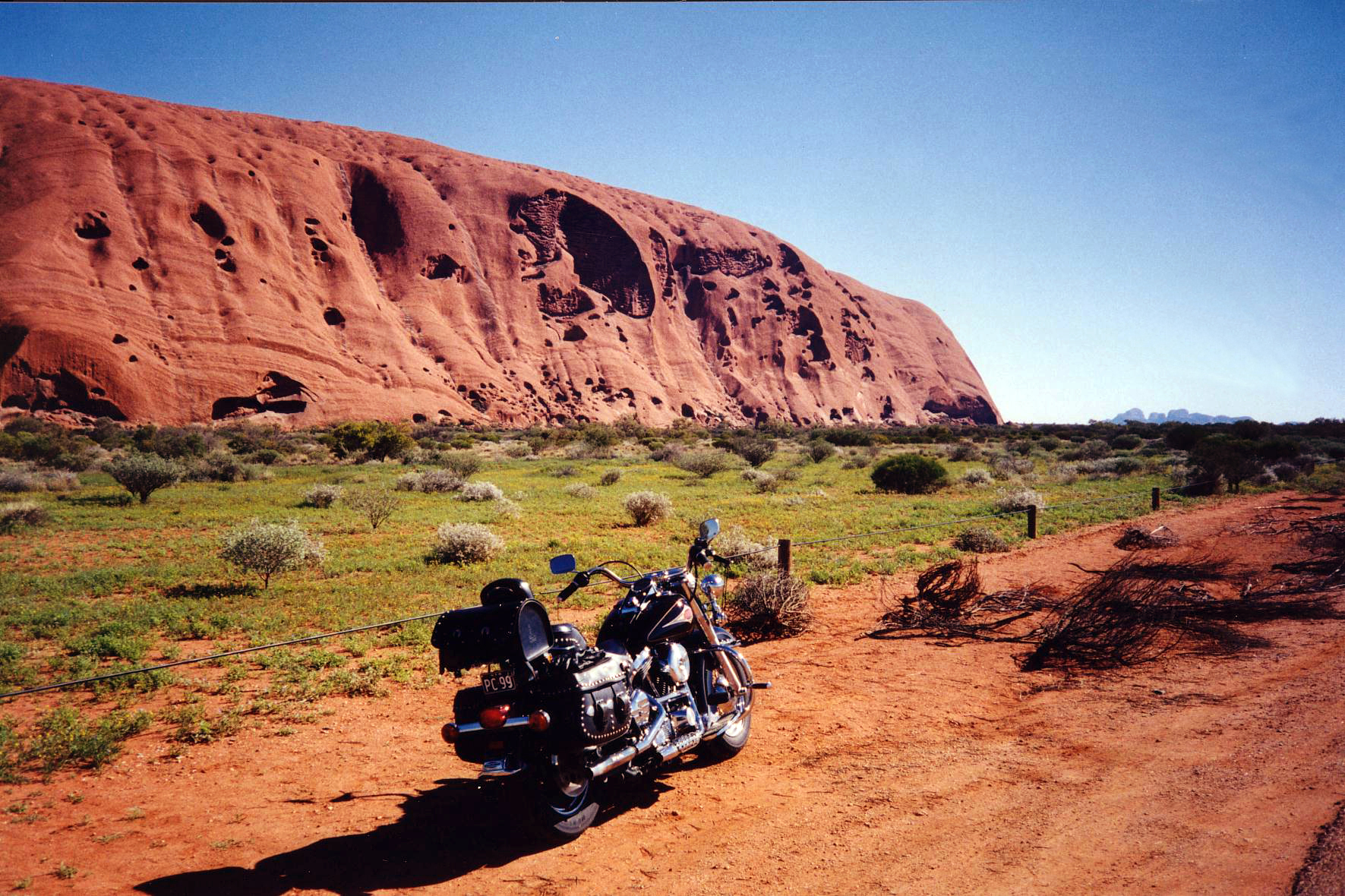
Some years earlier I was at The Rock on the bike and the following image was taken from a different viewpoint to the one above:
AT THE ROCK WITH MY FAVOURITE MODE OF TRANSPORT,2.05PM ON 29th AUGUST, 2005
As you can gather from these two images, Uluru is situate in an arid area of Australia. It rains at Uluru on average for only 30 days per annum and these falls give an average of 217 mm( 8.555 inches) of rain per annum.
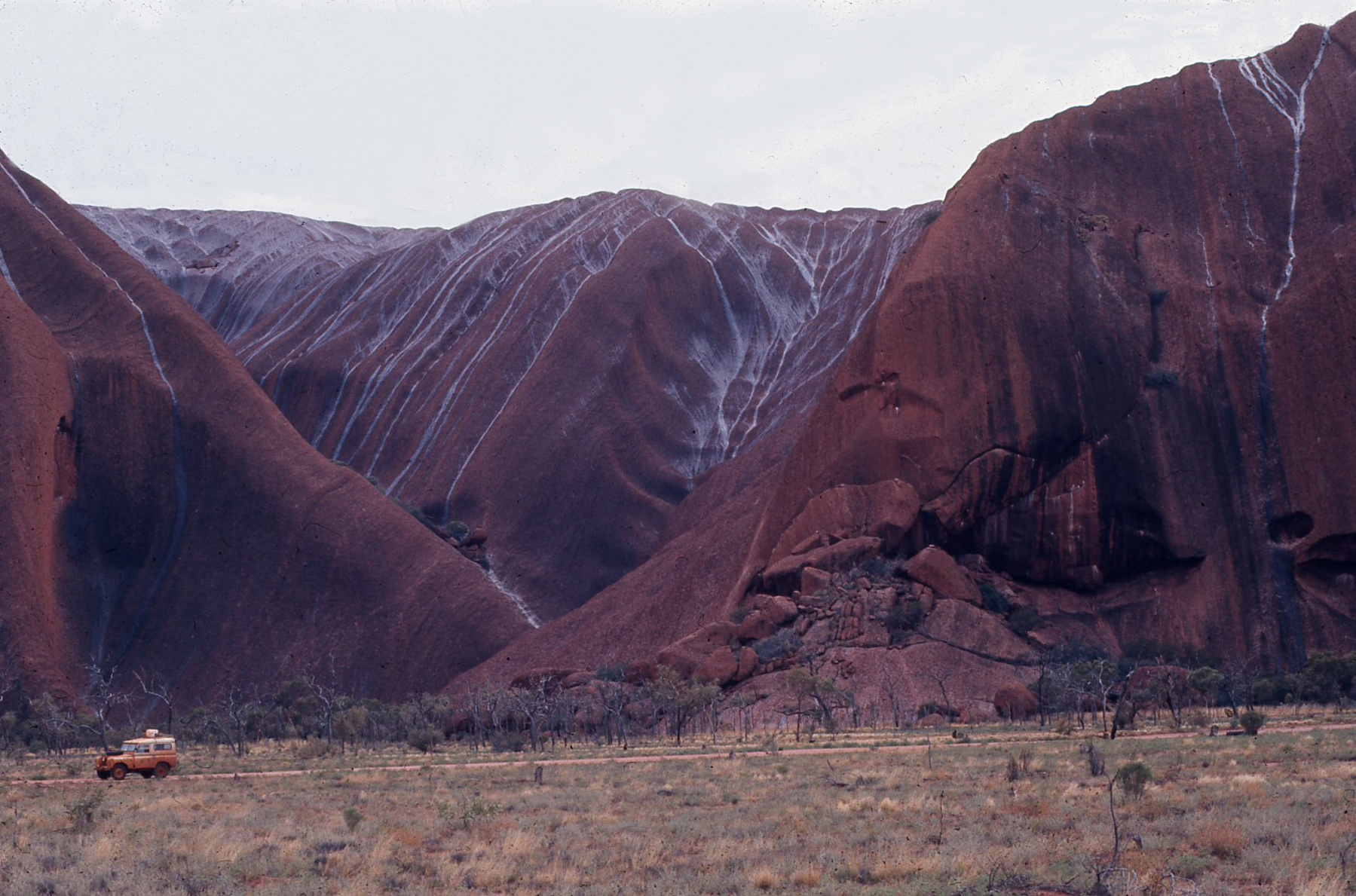
That means you are very very fortunate indeed to see rain on The Rock. I’m one of the lucky ones as these two following images show:
RAIN WATER FLOWING DOWN THE SIDE OF ULURU, CIRCA 1973. MY 1969 SERIES 11A LANDROVER IN THE IMAGE TOO.ABOUT A MILE OUT ON THE APPROACH TO A WET AYRES ROCK AS IT WAS THEN KNOWN, CIRCA, 1973.
It’s purely coincidental that I was at Ayres Rock as it was then called almost 100 years to the day from when Goss first saw it. According to history it was raining then too.
Why was I at the Rock way back in1973? Well that too is a story for another day.
Anyway, these are images of something big taken from four different viewpoints. I scanned the final two from my slide collection.
Seeing these images again has given me itchy feet.
Biannually, I ride with my motorcycling mates to Broken Hill in North Western New South Wales.
‘The Hill’ as it’s affectionally known by most Aussies is a mining town located in one of our arid zones with an average rainfall of 260mm( about 10 and a bit inches).
From my place to ‘The Hill’ is about 2500 klms return or about 3,000 miles however you measure distance these days.
Why do we do the ride you may ask? Well we’ve been doing it for so long now that none of us can recall why we started in the first place. Let’s say its just one of our traditions.
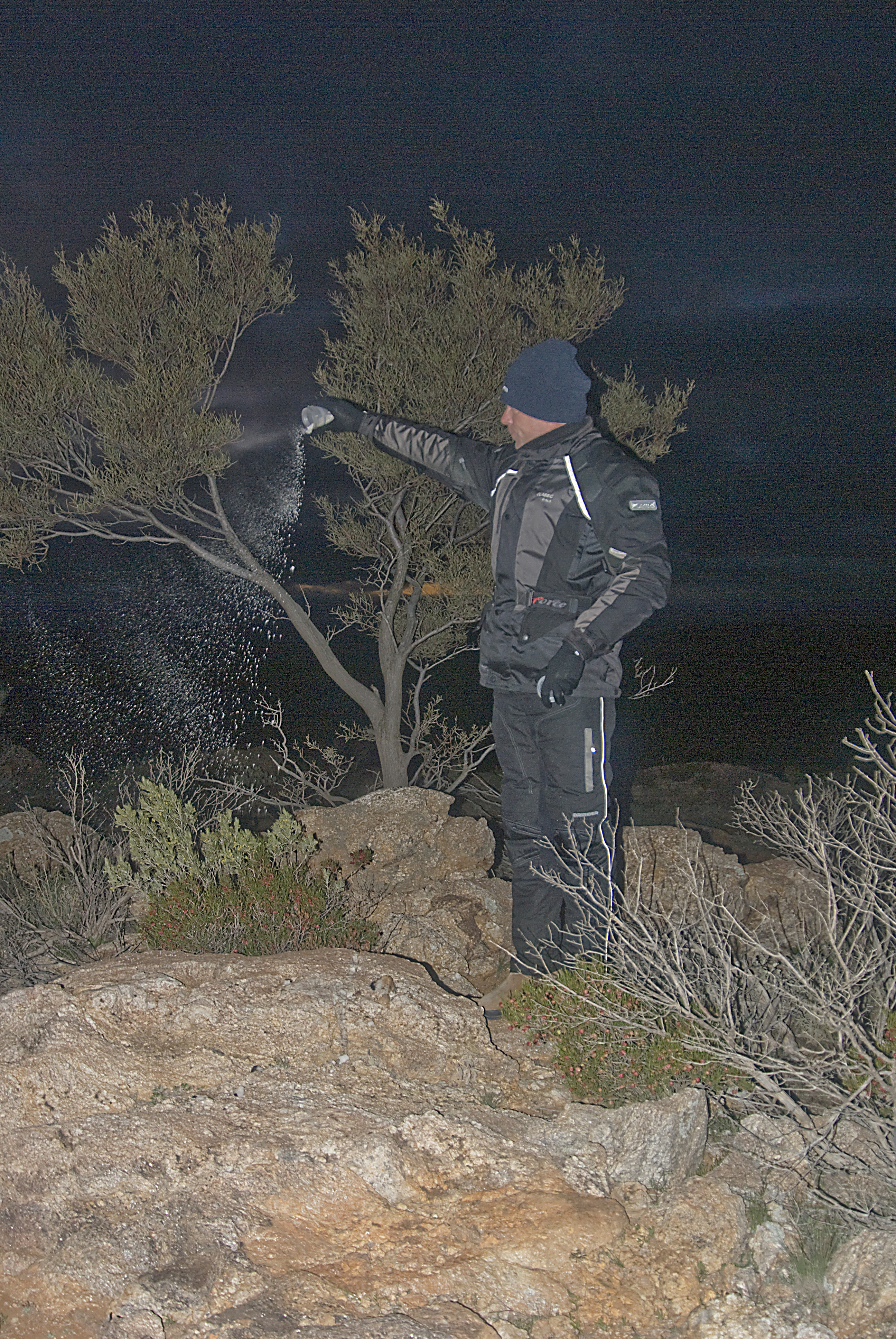
Now it came to pass that one of the blokes copped the ‘Big C’ and went to motor cycle heaven in quite a rush. Before he commenced that final journey he told us that he wanted his ashes scattered at Broken Hill and was particular that the place be ‘The Sculptures’.
The Sculptures may be the subject of a blog some other time.
Anyway, with his ashes safely packed away, off we went to ‘The Hill’ to fulfil our cobber’s wishes.
Oh, I forgot to add, the deceased specified dawn as the time he wanted his ashes scattered to the winds.
Before dawn on the appointed day we rode out of ‘The Hill’ and arrived at The Sculptures just before sun up.
Brother Brian as we call him had volunteered to scatter Bob’s ashes and as he did so each of us farewelled our mate Bob in our own special way.
BROTHER BRIAN CASTS BOB’s ASHES TO THE WINDS.GATHERED AROUND BIG AL’S VALKERIE TO SWAP A FEW YARNS ABOUT BOB.
Then, as the sun rose, we gathered together around Big Al’s bike and each of us related a yarn about Bob.
By the time we had all said our piece, the sun was well and truly over the horizon and it was time for the boys to pose beside one of the sculptures. This gave Brother Brian the opportunity to take a few minutes to make his private farewells with Bob.
With the sun well and truly above the horizon the boys posed with two of the sculptures.
As we walked back to our bikes, the sun was shining brightly on this sculpture, lifting our mood after a couple of difficult hours.
ANOTHER OF THE SCULPTURES AT ‘THE HILL’ THAT HOLDS A SPECIAL PLACE IN OUR MEMORIES..
So, where does all this relate to ‘connect’?
Firstly, our little group is firmly connected through our passion for motorcycles.
Secondly, we feel connected because we have been riding together for over twenty years.
Thirdly, we feel connected through our traditions, which we all observe, particularly our biannual ride to ‘The Hill’.
Fourthly, with Bob’s passing and the distribution of his ashes, we feel more closely connected than ever before.
Finally, we all respect each others idiosyncrasies, creeds, interests and observance of social mores when we are out on a ride.
I guess this all means we are’ Well Connected’ but not in the traditional social sense.
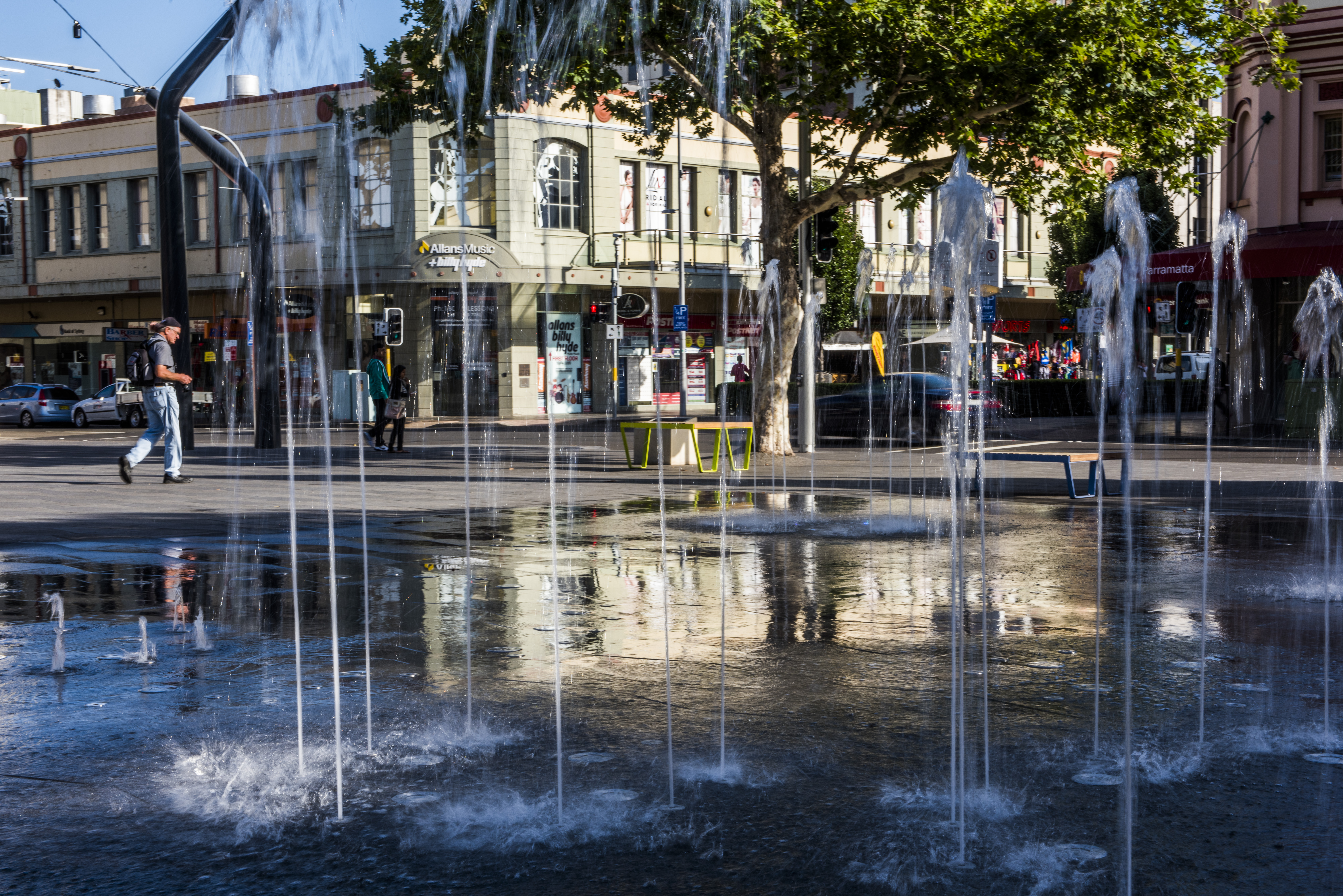
On Saturday 7th March 2015, I left home at 5.30am to meet up with some camera nut friends at 8.30am in Parramatta, Sydney’s western satellite city.
Our objective for the day was to photograph examples of Parramatta’s architecture and to visit ‘Old Government House’, Australia’s oldest surviving public building. That may be the subject of a separate blog at some later date.
I didn’t get to see our current photo101 weekend assignment until after 6pm when I arrived home.
Imagine my surprise when on downloading my day’s images I found a few that almost fit the assignment’s requirements, if you exclude the rule of thirds applying to each of them.
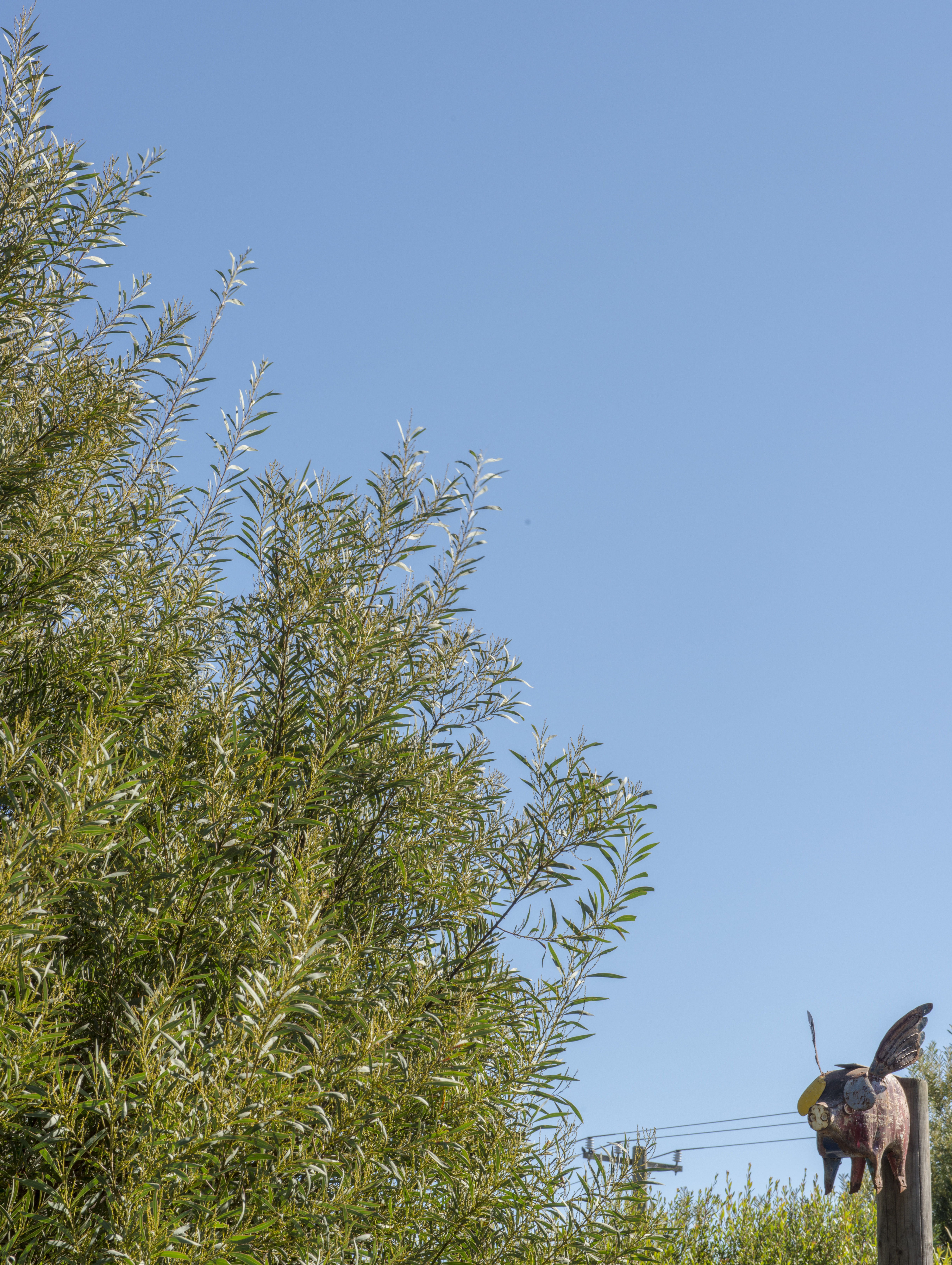
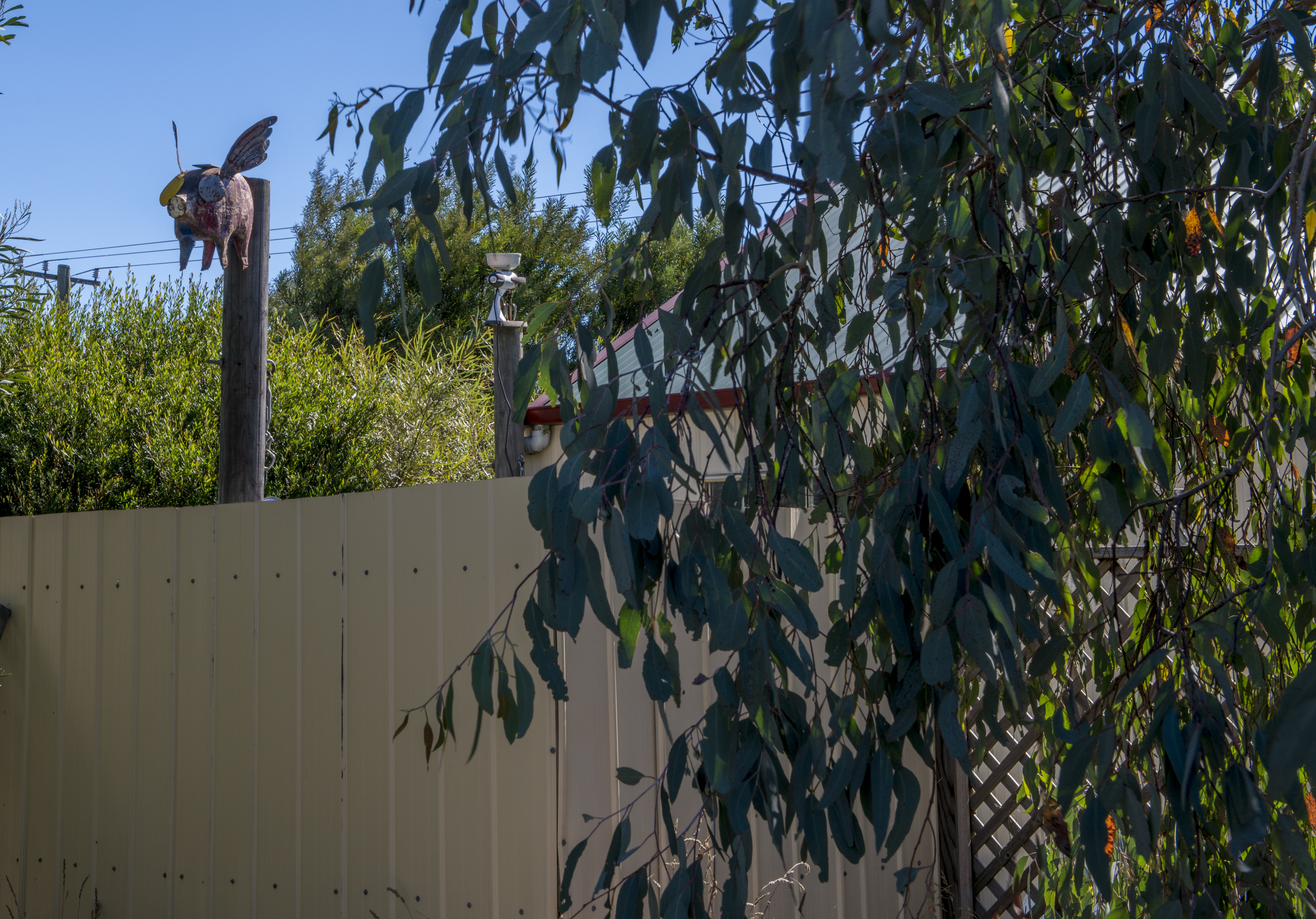
A few moments ago I popped out into the backyard and made two images with the subject top left in one and lower right in the other. How I detest the rule of thirds. In fact I rarely use the rule in my image making.
So kind folk, herewith this weekend’s offering plus the two from this morning, the two Piggys.
My apologies for the randomness of the images, I’m yet to master these Blog techniques.
Portrait Piggy 1
.
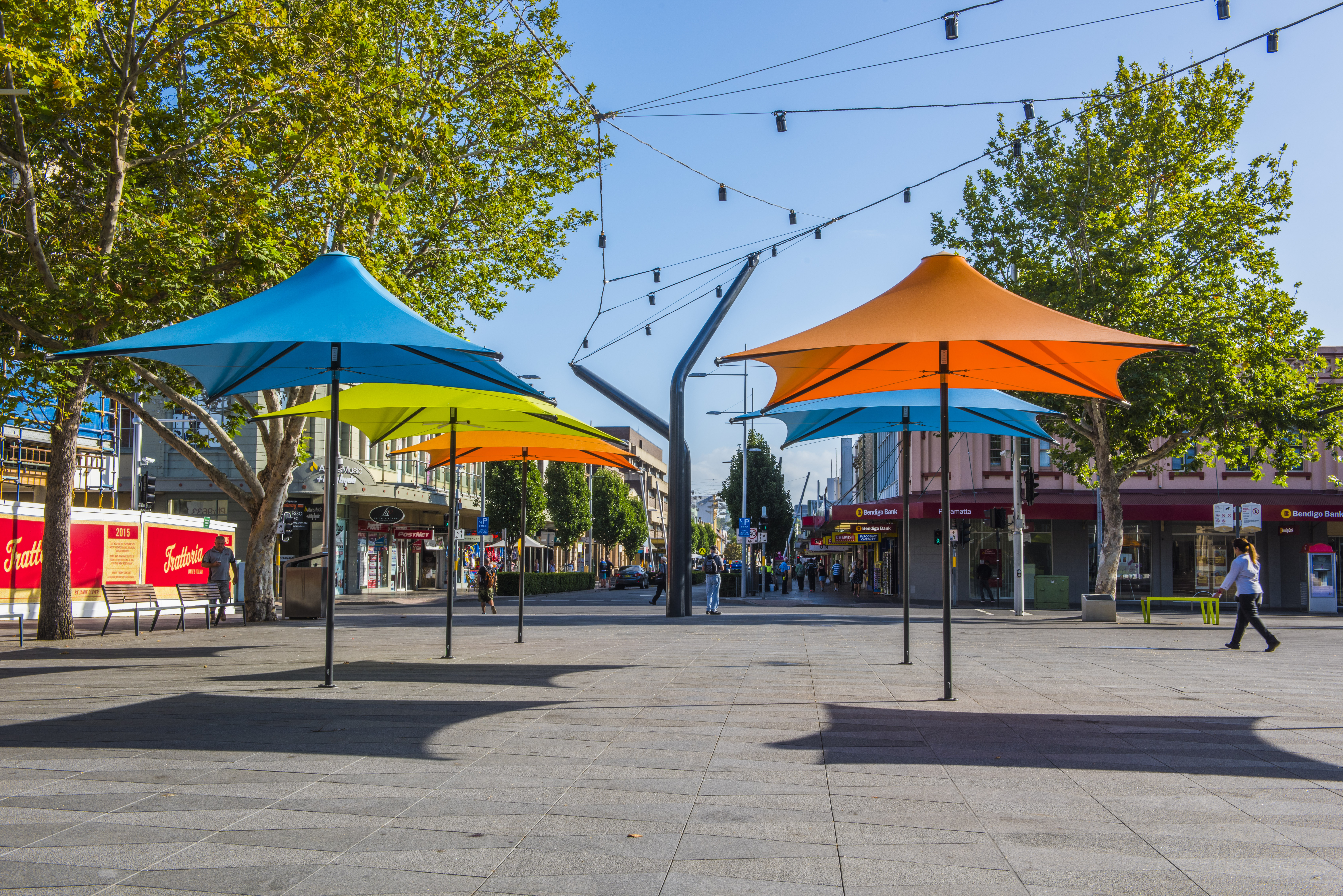
Portrait Fountain 1Landscape Fountain 1Landscape Building 1Portrait Building 1Landscape Piggy 1Portrait Mall 1Landscape Mall 1Plaza LandscapePlaza Portrait from different view point.
Of These images, my favourite is this Plaza Portrait. I made the image from a different viewpoint as I wanted the frame the artwork on the corner facade of the building in the background and my three associates , dare I saw it, in the lower left third where they would exactly be had I chosen to crop the image.
When thinking about Day 5’s challenge I recalled the wonderful solitude as I sat alone on the banks of the Finke River in Australia’s Northern Territory just a year or so ago.
The Finke is believed by many to be the oldest river in the world. It has been dated as between 100 and 340 million years old. It is also one of the driest rivers in Australia’s outback and seldom carries water. However, when it does, its flow is enormous as it drains vast areas of country.
It’s nearly 2000 klms from my place to the Finke River crossing so I haven’t got time to duck up there and grab a photo for today’s assignment.
So, instead, I pulled out the following image I had taken when there last. By pure chance the photo also included an example of the use of the rule of thirds.
I subscribe to the idea that the rules of photography are there to be broken so I seldom follow the ‘rule of thirds’ intentionally when I compose an image.
But back to my yarn, as I drove across the Finke’s dry river bed on the track that follows the Old Ghan Railway Line I was tickled to see this old bike frame stuck in the sand beside the road.
After I made this image I stopped for a while on the other side of the river in perfect solitude, just to appreciate my surroundings and to wonder who left the old bike beside the road and how long it had been there.
So, here it is, my ‘Solitude & Rule of Thirds’ image for today:
THE MIGHTY FINKE RIVER, NORTHERN TERRITORY, AUSTRALIA.
The photograph was taken about 10.30 am in strong sunlight. As I wanted a good depth of field, I chose f16 as my aperture with 1/200 sec shutter speed at ISO 200. I used a 24-120 zoom lens with the lens set at 40mm.























 CREAKINGBONES