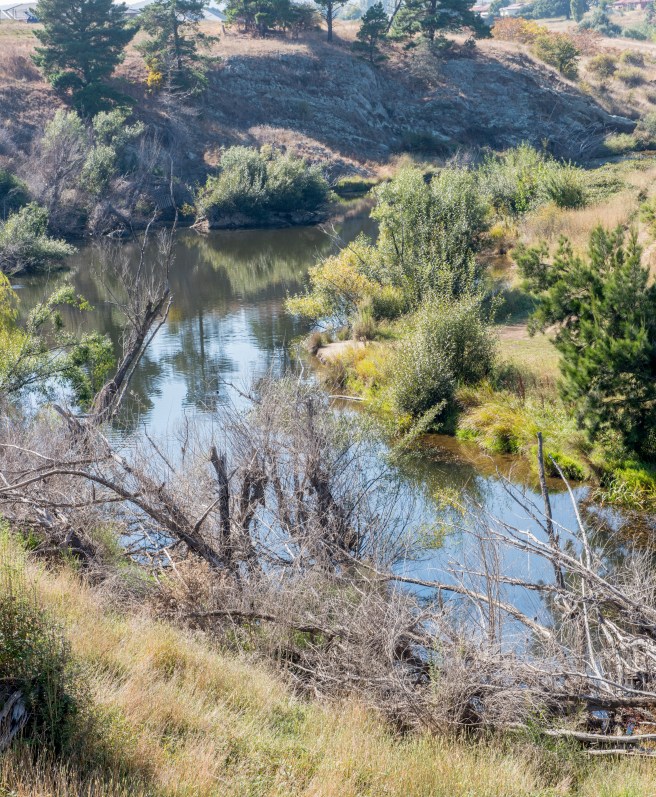
Didn’t have time yesterday to undertake Day 8’s task, so this morning I popped down to the Wollondilly River to make an image I though suited the requirements.
The Wollondilly River in portrait mode.
In the above image, the meandering river curves around to the right, leading the eye past the river banks.
In the following image, taken in landscape mode, the scene takes on a different feeling with the river still leading the eye but revealing a more expansive view of the river banks.
The Wollondilly River, landscape mode.
As a product of the western world’s education system, I read from left to right and it follows that my natural sight sense allows me to follow leading lines at their best if the the lines begin in the left hand side of the image. Works well too if the leading line is in the centre of the frame.
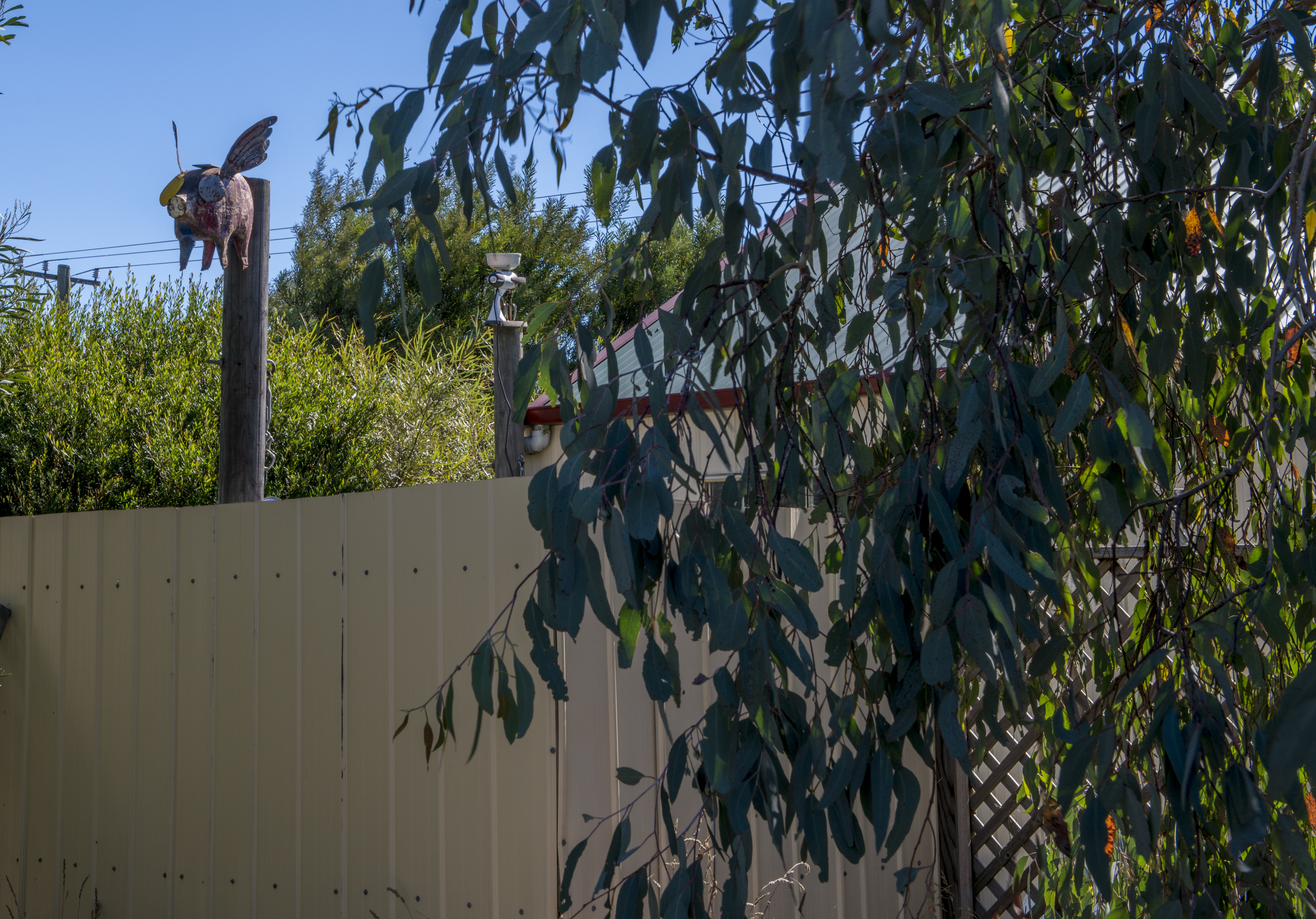
In the following image, my side fence works as a leading line and draws the viewer between the hedge and the eucalypts to the roof line of the house in the background.
It works well compared to the River images as, dare I saw it, it’s start complies with the dreaded rule of thirds, left hand lower corner.
A BACKYARD FENCE FLANKED BY HEDGE AND EUCALYPTS TREES.
So, another morning of photographic fun over till day nine’s email arrives.
Just like Texas, there are heaps of ‘big’ things here in the Land Down Under.
Take Uluru or, Ayres Rock as it used to be known. Uluru is in the Northern Territory, 335km or 208 miles south west of Alice Springs. It’s pretty big and I thought it would be ideal for todays subject.
Firstly though a little bit of history.
On July the 19th, 1873 William Goss, a surveyor became the first white man to see the ‘The Rock’ as we Aussies generally call it. Goss named it Ayres Rock after the then Chief Secretary of South Australia.
To local Pitjantjatjara people it was Uluru, a place of great spiritual significance and eventually the name was changed from Ayres Rock to Uluru.
Uluru is a sandstone monolith, 384 metres (1142 feet) high with a total circumference of 9.4 kms (5.8 miles). Most of its bulk is underground.
Uluru appears to change colour at different times of the year and often glows red at dawn or dusk, the most popular viewing times for tourists.
So, it is a great subject for today.
Just one problem though, Uluru is 2,818 km or 1,751 and a bit miles each way from my place. Just a tad too far to do today.
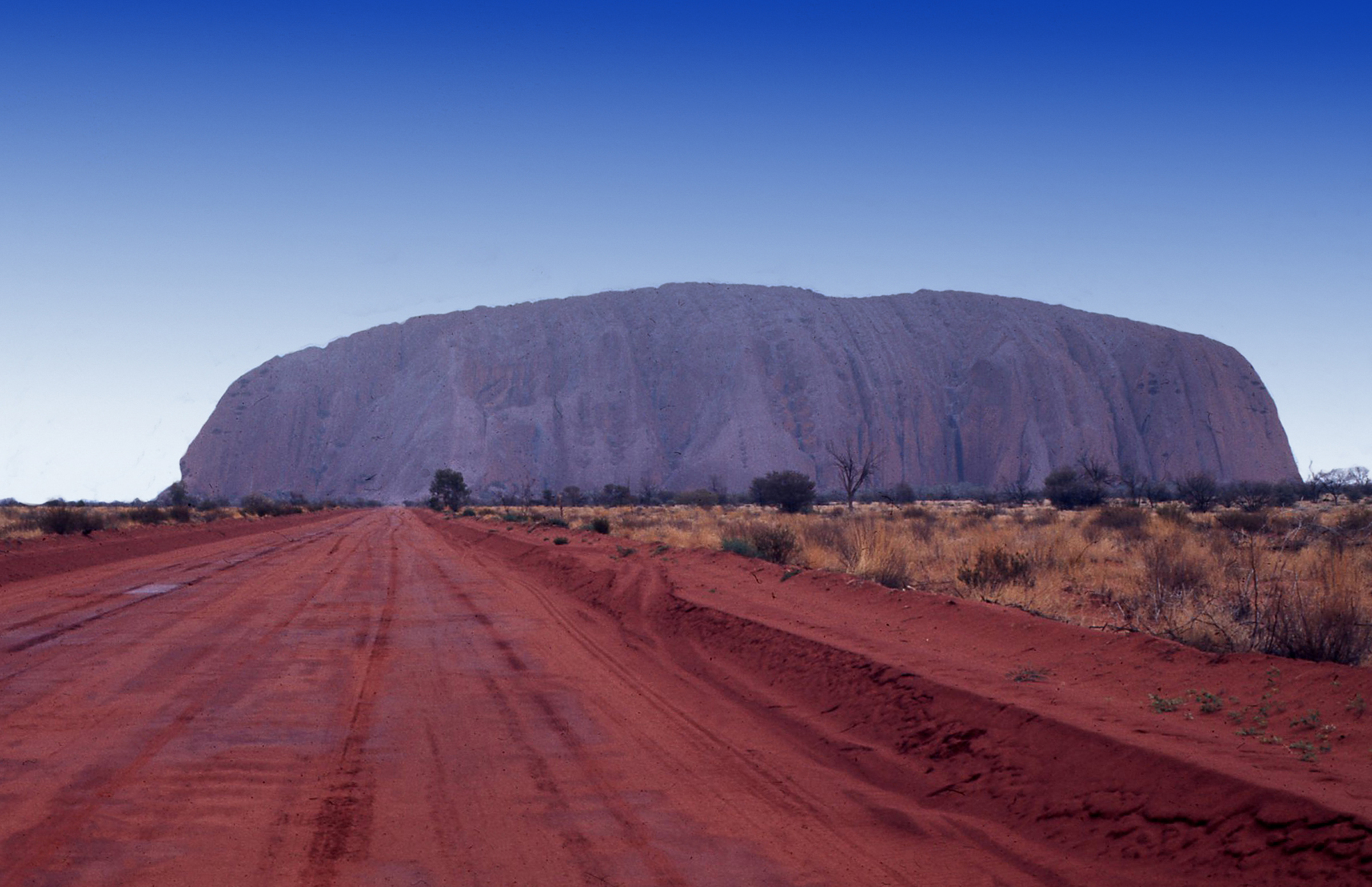
Fortunately I’ve been there on a number of occasions, most recently just last year and here is how Uluru appeared at 10.42am on May the 15th, 2014:
ULURU AT 10.42AM ON THE 15TH MAY 2014
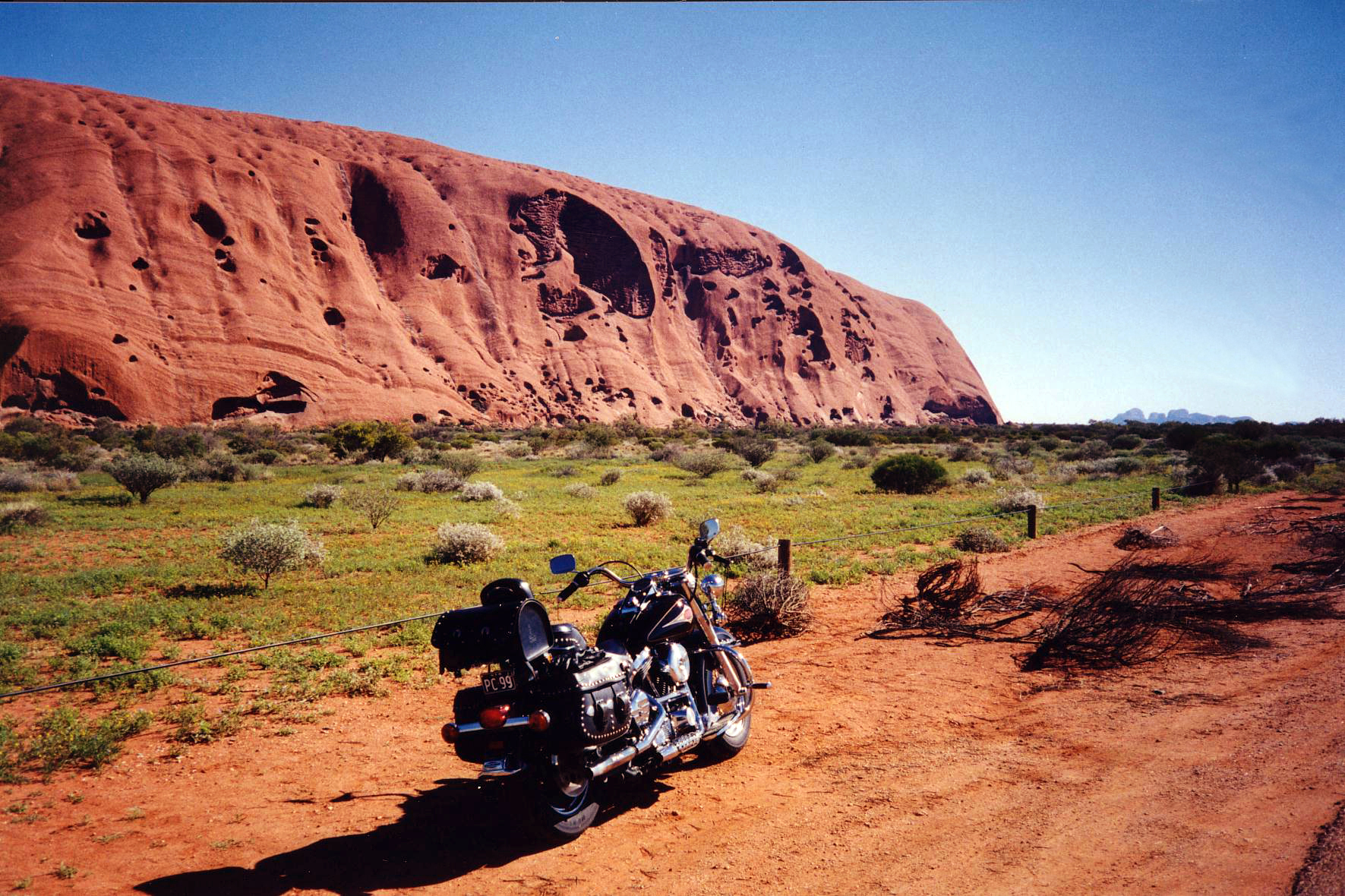
Some years earlier I was at The Rock on the bike and the following image was taken from a different viewpoint to the one above:
AT THE ROCK WITH MY FAVOURITE MODE OF TRANSPORT,2.05PM ON 29th AUGUST, 2005
As you can gather from these two images, Uluru is situate in an arid area of Australia. It rains at Uluru on average for only 30 days per annum and these falls give an average of 217 mm( 8.555 inches) of rain per annum.
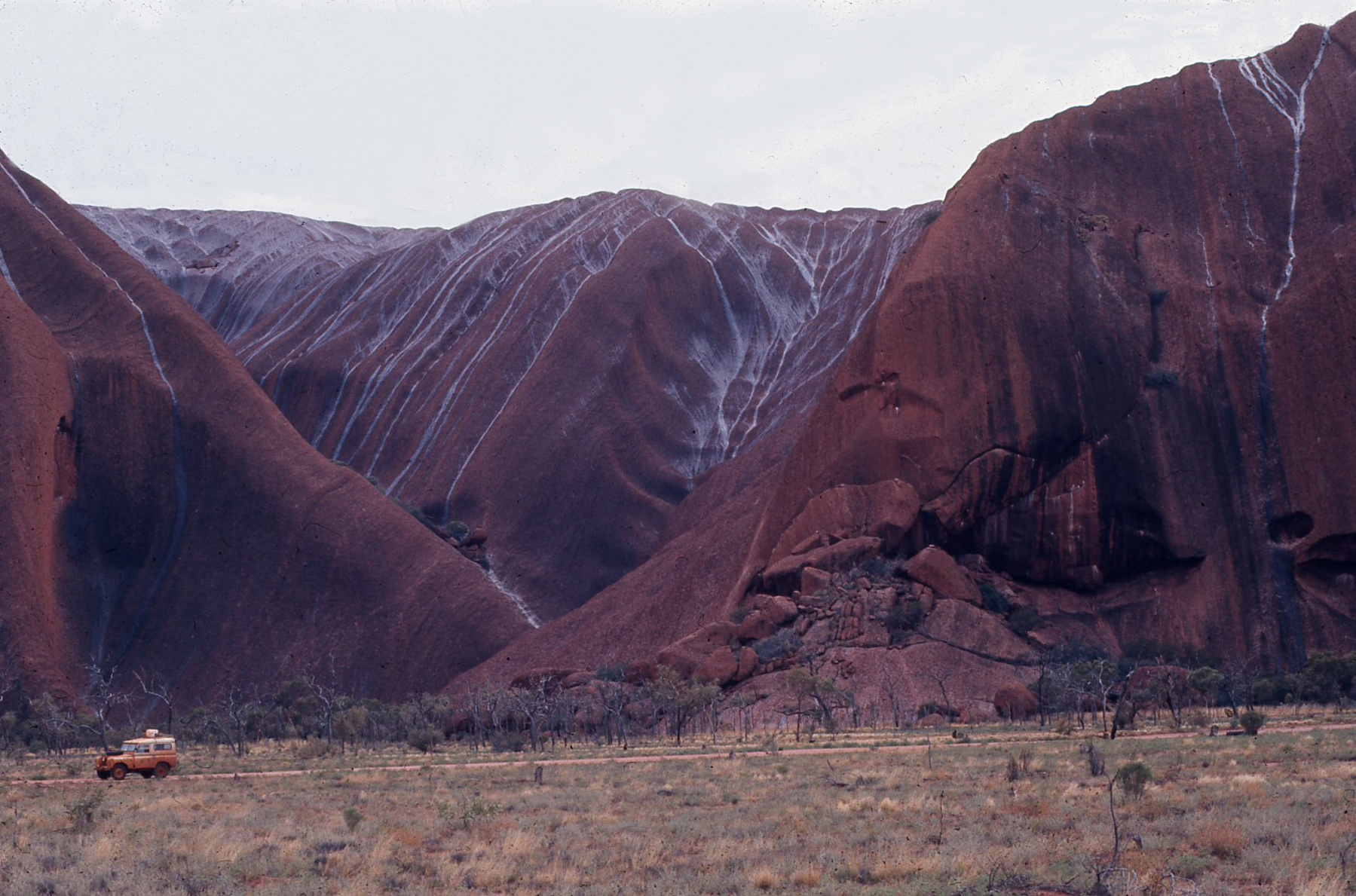
That means you are very very fortunate indeed to see rain on The Rock. I’m one of the lucky ones as these two following images show:
RAIN WATER FLOWING DOWN THE SIDE OF ULURU, CIRCA 1973. MY 1969 SERIES 11A LANDROVER IN THE IMAGE TOO.ABOUT A MILE OUT ON THE APPROACH TO A WET AYRES ROCK AS IT WAS THEN KNOWN, CIRCA, 1973.
It’s purely coincidental that I was at Ayres Rock as it was then called almost 100 years to the day from when Goss first saw it. According to history it was raining then too.
Why was I at the Rock way back in1973? Well that too is a story for another day.
Anyway, these are images of something big taken from four different viewpoints. I scanned the final two from my slide collection.
Seeing these images again has given me itchy feet.
Biannually, I ride with my motorcycling mates to Broken Hill in North Western New South Wales.
‘The Hill’ as it’s affectionally known by most Aussies is a mining town located in one of our arid zones with an average rainfall of 260mm( about 10 and a bit inches).
From my place to ‘The Hill’ is about 2500 klms return or about 3,000 miles however you measure distance these days.
Why do we do the ride you may ask? Well we’ve been doing it for so long now that none of us can recall why we started in the first place. Let’s say its just one of our traditions.
Now it came to pass that one of the blokes copped the ‘Big C’ and went to motor cycle heaven in quite a rush. Before he commenced that final journey he told us that he wanted his ashes scattered at Broken Hill and was particular that the place be ‘The Sculptures’.
The Sculptures may be the subject of a blog some other time.
Anyway, with his ashes safely packed away, off we went to ‘The Hill’ to fulfil our cobber’s wishes.
Oh, I forgot to add, the deceased specified dawn as the time he wanted his ashes scattered to the winds.
Before dawn on the appointed day we rode out of ‘The Hill’ and arrived at The Sculptures just before sun up.
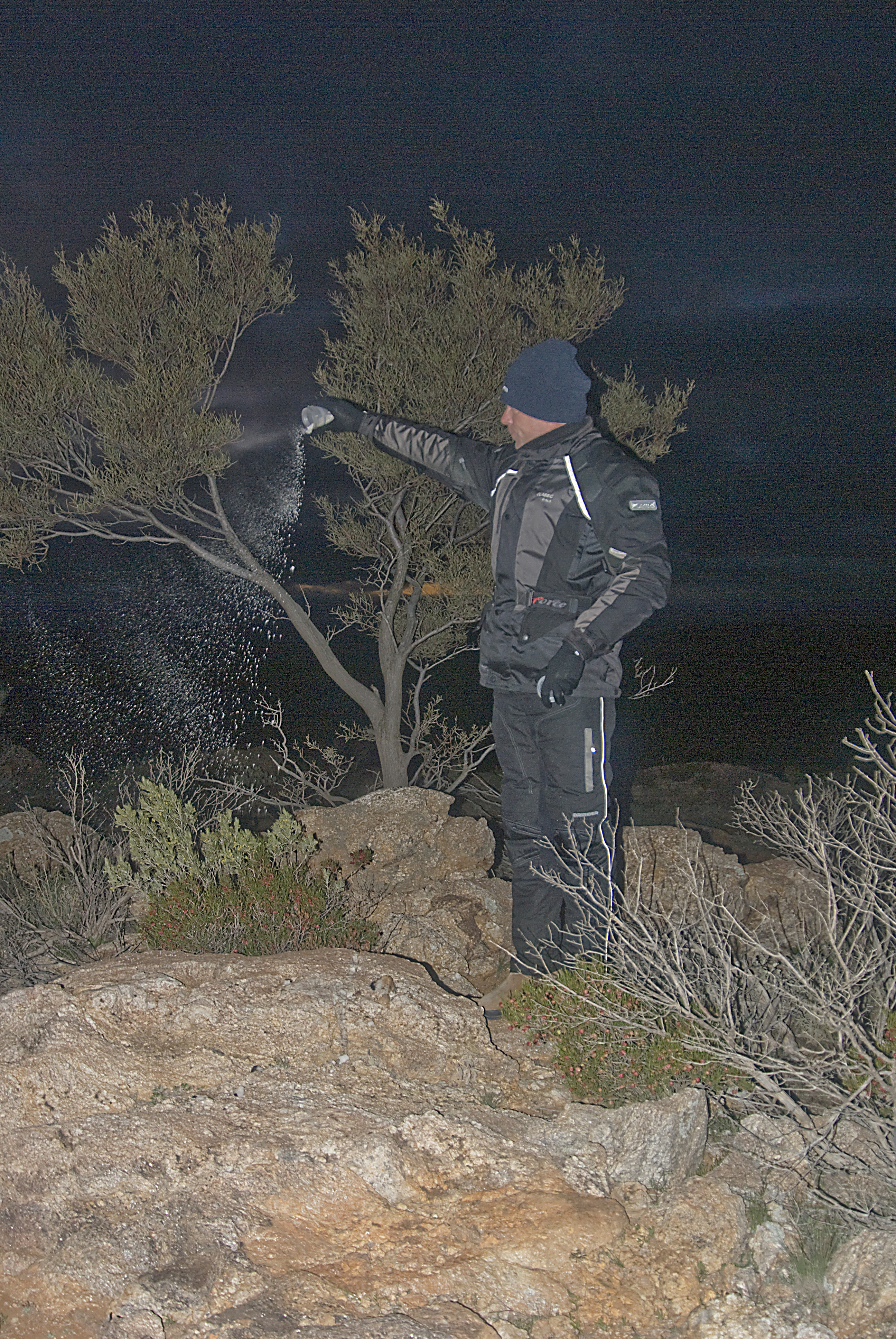
Brother Brian as we call him had volunteered to scatter Bob’s ashes and as he did so each of us farewelled our mate Bob in our own special way.
BROTHER BRIAN CASTS BOB’s ASHES TO THE WINDS.GATHERED AROUND BIG AL’S VALKERIE TO SWAP A FEW YARNS ABOUT BOB.
Then, as the sun rose, we gathered together around Big Al’s bike and each of us related a yarn about Bob.
By the time we had all said our piece, the sun was well and truly over the horizon and it was time for the boys to pose beside one of the sculptures. This gave Brother Brian the opportunity to take a few minutes to make his private farewells with Bob.
With the sun well and truly above the horizon the boys posed with two of the sculptures.
As we walked back to our bikes, the sun was shining brightly on this sculpture, lifting our mood after a couple of difficult hours.
ANOTHER OF THE SCULPTURES AT ‘THE HILL’ THAT HOLDS A SPECIAL PLACE IN OUR MEMORIES..
So, where does all this relate to ‘connect’?
Firstly, our little group is firmly connected through our passion for motorcycles.
Secondly, we feel connected because we have been riding together for over twenty years.
Thirdly, we feel connected through our traditions, which we all observe, particularly our biannual ride to ‘The Hill’.
Fourthly, with Bob’s passing and the distribution of his ashes, we feel more closely connected than ever before.
Finally, we all respect each others idiosyncrasies, creeds, interests and observance of social mores when we are out on a ride.
I guess this all means we are’ Well Connected’ but not in the traditional social sense.
On Saturday 7th March 2015, I left home at 5.30am to meet up with some camera nut friends at 8.30am in Parramatta, Sydney’s western satellite city.
Our objective for the day was to photograph examples of Parramatta’s architecture and to visit ‘Old Government House’, Australia’s oldest surviving public building. That may be the subject of a separate blog at some later date.
I didn’t get to see our current photo101 weekend assignment until after 6pm when I arrived home.
Imagine my surprise when on downloading my day’s images I found a few that almost fit the assignment’s requirements, if you exclude the rule of thirds applying to each of them.
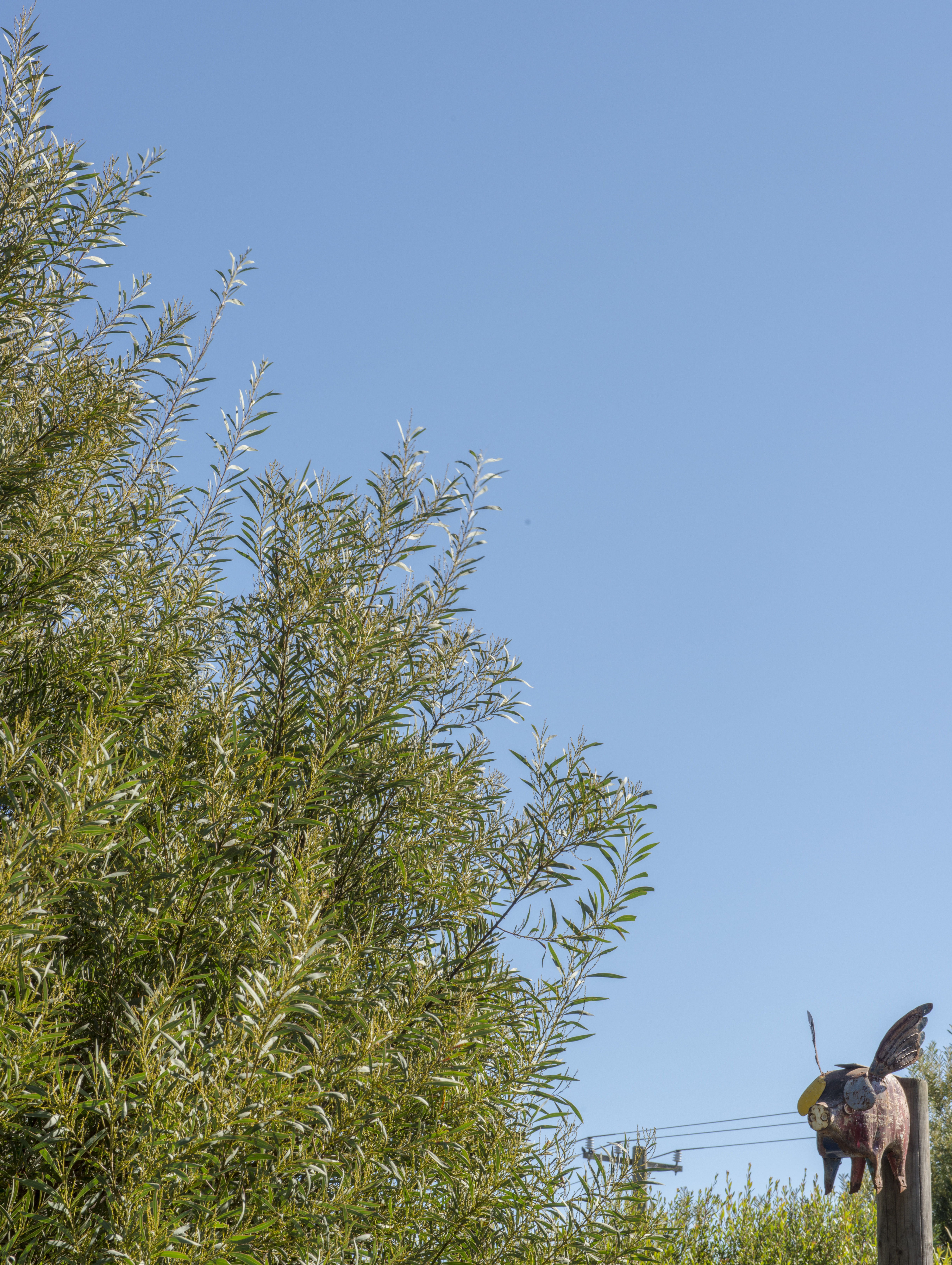
A few moments ago I popped out into the backyard and made two images with the subject top left in one and lower right in the other. How I detest the rule of thirds. In fact I rarely use the rule in my image making.
So kind folk, herewith this weekend’s offering plus the two from this morning, the two Piggys.
My apologies for the randomness of the images, I’m yet to master these Blog techniques.
Portrait Piggy 1
.
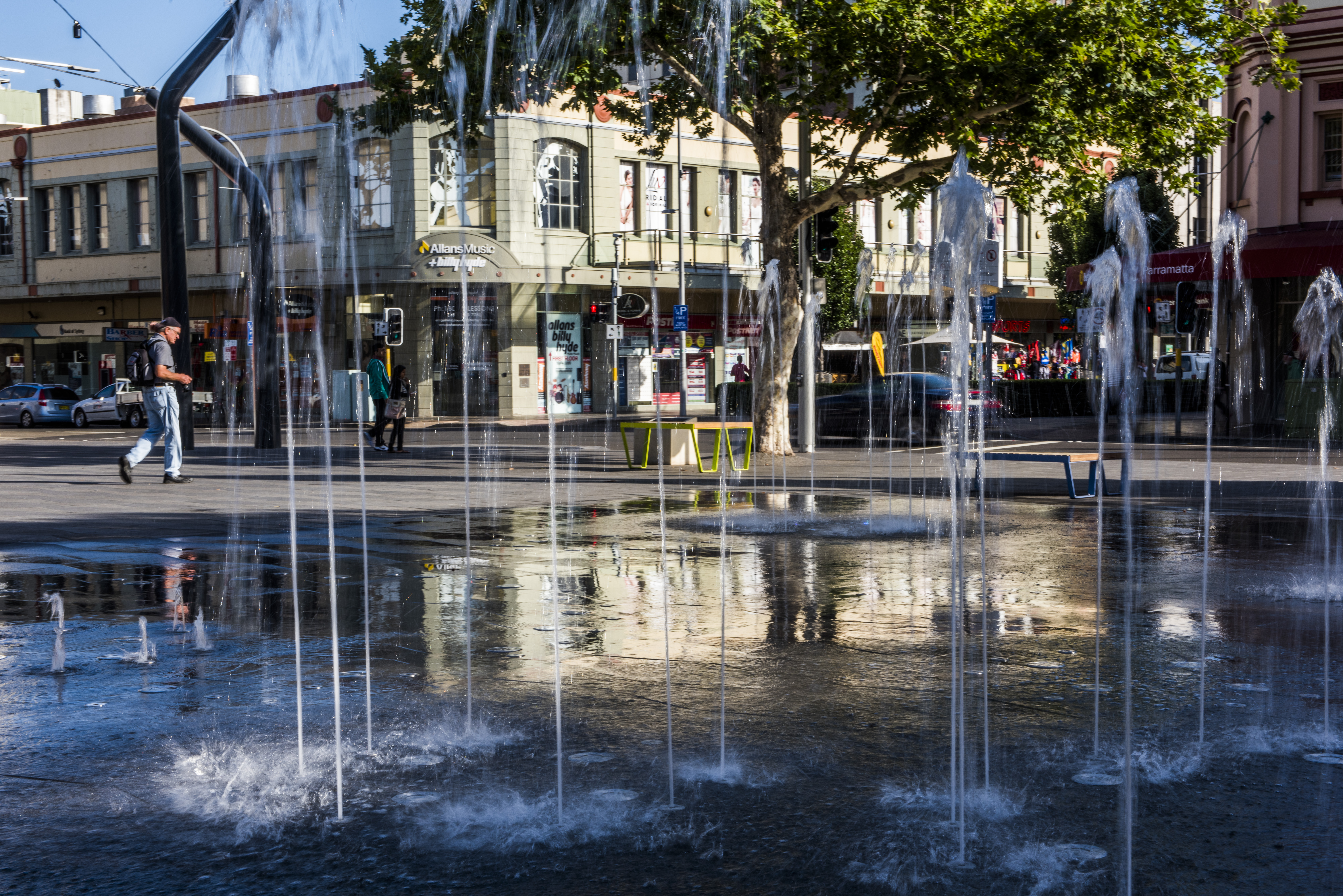
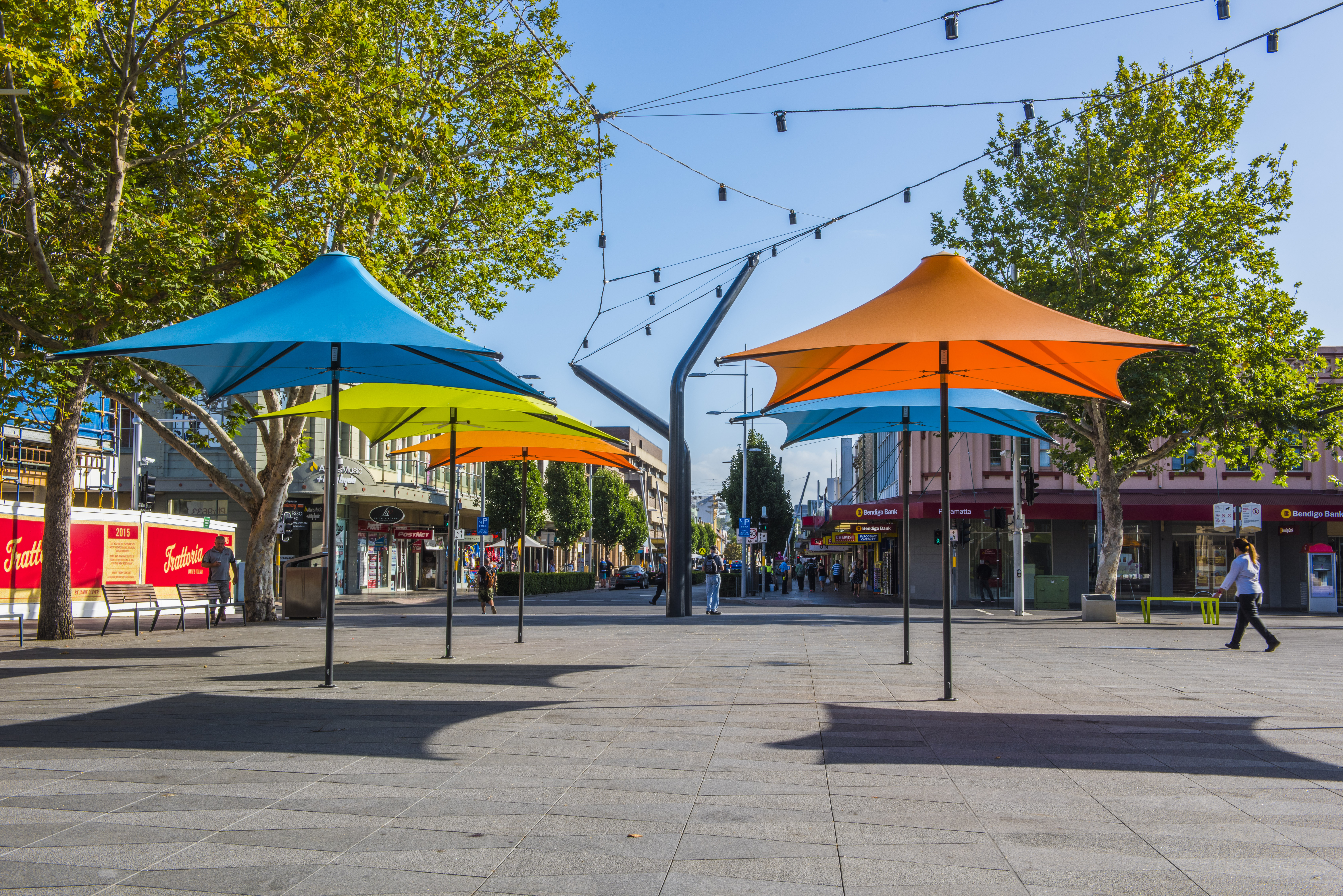
Portrait Fountain 1Landscape Fountain 1Landscape Building 1Portrait Building 1Landscape Piggy 1Portrait Mall 1Landscape Mall 1Plaza LandscapePlaza Portrait from different view point.
Of These images, my favourite is this Plaza Portrait. I made the image from a different viewpoint as I wanted the frame the artwork on the corner facade of the building in the background and my three associates , dare I saw it, in the lower left third where they would exactly be had I chosen to crop the image.
When thinking about Day 5’s challenge I recalled the wonderful solitude as I sat alone on the banks of the Finke River in Australia’s Northern Territory just a year or so ago.
The Finke is believed by many to be the oldest river in the world. It has been dated as between 100 and 340 million years old. It is also one of the driest rivers in Australia’s outback and seldom carries water. However, when it does, its flow is enormous as it drains vast areas of country.
It’s nearly 2000 klms from my place to the Finke River crossing so I haven’t got time to duck up there and grab a photo for today’s assignment.
So, instead, I pulled out the following image I had taken when there last. By pure chance the photo also included an example of the use of the rule of thirds.
I subscribe to the idea that the rules of photography are there to be broken so I seldom follow the ‘rule of thirds’ intentionally when I compose an image.
But back to my yarn, as I drove across the Finke’s dry river bed on the track that follows the Old Ghan Railway Line I was tickled to see this old bike frame stuck in the sand beside the road.
After I made this image I stopped for a while on the other side of the river in perfect solitude, just to appreciate my surroundings and to wonder who left the old bike beside the road and how long it had been there.
So, here it is, my ‘Solitude & Rule of Thirds’ image for today:
THE MIGHTY FINKE RIVER, NORTHERN TERRITORY, AUSTRALIA.
The photograph was taken about 10.30 am in strong sunlight. As I wanted a good depth of field, I chose f16 as my aperture with 1/200 sec shutter speed at ISO 200. I used a 24-120 zoom lens with the lens set at 40mm.
Well, bliss means many things to many people. I thought,’ what does the word mean to me?’ After going through many options, some significant and others totally meaningless, I concluded that to me, as a young old bloke, ‘Bliss’ is being alive and out and about on the bike, camera readily accessible, just in case.
Just recently, I had gone to see a friend at her workplace and parked my bike between the trees in the shade near her office. As I got off the bike I glimpsed my image in the rear view mirror and immediately thought, ‘selfie’. Off came the helmet, grabbed the camera from the saddle bag and hopped back in the saddle.
My friend had recognised the exhaust note and popped out of her office, camera in hand and made the following image.
As for my selfie, I never got to take it. That’s what happens when you are in a state of bliss.
G’day fellow students of photo101. Today’s topic couldn’t have suited me better.
Reason? Just a short stroll from home is a weir damming the Wollondilly River. Making the spot all the better is that on the banks of the river is located the town’s original water pump house, now a steam museum. Both the weir and the pump house are clearly visible from the road bridge that crosses the river. The pump house is the brick building with the large smoke stack and green roof you can see in the background.
The spot really suits Day 3’s requirements because it suits both landscape and portrait photography and can dramatically illustrate the difference between the two when photographing the same scene using the identical point of focus, aperture, focal length of the lens and of course point of view.
Here is image No1 in landscape mode :
This was shot at 1/1250th second at f16, ISO 200 and using a zoom lens set at 70mm.
Here is image No2 in portrait mode
This too was shot at 1/125th second at f16, ISO 200 using the same zoom lens set at 70mm.
In portrait mode, you can see that both the foreground and background are larger than in landscape mode but the image does not capture as much of the overall scene as does landscape.
Neither image has been cropped. Both taken about 4.30pm this afternoon and within 15-20 seconds of each other.
Hope you enjoy looking tag them as much I did did taking them.
I know I said in a previous post that I wouldn’t waffle on but I just can’t help it.
Day 2 has come and gone, the assignment is completed.
Finding a busy street scene in our country town on a weekday afternoon is no easy task. We are also graffiti free, so a colourful lane was out of the question.
So, i sat at an intersection on our main street, waited for the traffic lights to halt through traffic and pedestrians. The lights turned to green, people began to walk across the intersection and I made
the following image.Technical details, Aperture priority, 1/320 seconds @ f11, 24mm lense, ISO 200.












 Technical details, Aperture priority, 1/320 seconds @ f11, 24mm lense, ISO 200.
 CREAKINGBONES